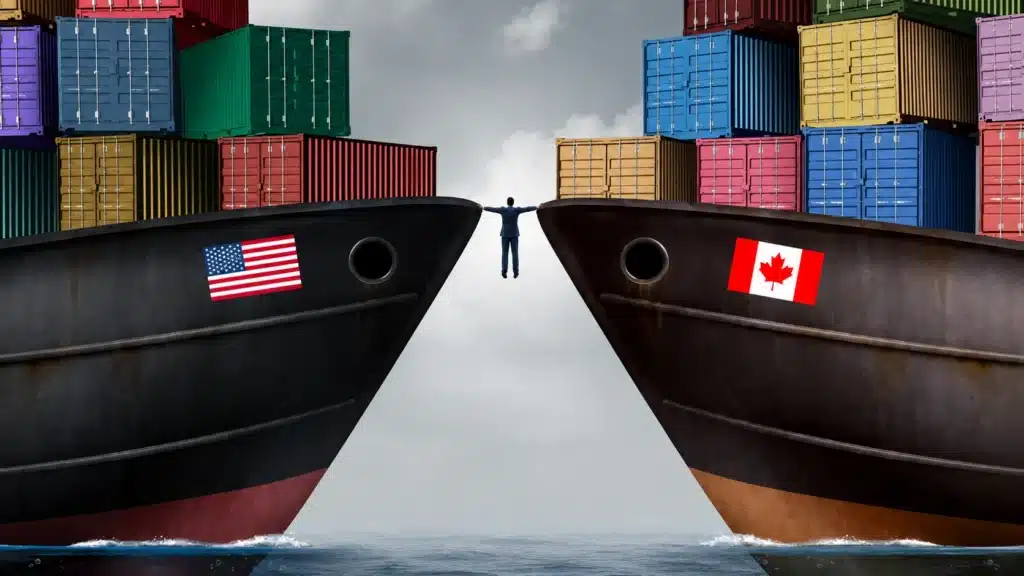
In the public imagination, immigration policy and trade policy occupy separate spheres. One brings people. The other moves goods.
But in the real economy, and especially in a globalized country like Canada, the two are inseparable.
As tariff threats rise between Canada and its largest trading partner, the United States, a silent consequence is emerging: our immigration system is absorbing the shock. And yet, the national conversation barely mentions it.
This is not just a diplomatic issue. It is a strategic fracture that jeopardizes the success of Canada’s economic immigration model.
When Trade Contracts, So Do Pathways to Permanent Residency
Canada’s immigration framework is designed around a singular logic: that newcomers will fill jobs the economy cannot otherwise fill. This is particularly true of:
-
- Employer-driven pathways (LMIA-based work permits)
- Provincial Nominee Programs (PNPs)
- Post-graduate work permit to PR transitions
But what happens when exports decline due to tariffs and companies halt hiring?
-
- Job offers disappear
- Employers withdraw LMIA applications
- PNP nominations stall
- Permanent residency targets tied to labour market demand shrink in practice, even if they remain high on paper
Tariffs suppress the economic demand that supports immigration supply.
Canada’s Immigration System Relies on Trade-Exposed Sectors
A significant share of economic-class immigrants settle into roles in:
-
- Manufacturing (auto parts, machinery, food processing)
- Agri-food (meat processing, grain handling)
- Transportation and logistics
- Advanced services connected to exports
These are precisely the sectors most vulnerable to a trade war with the U.S. When tariffs reduce cross-border flows, it is not just GDP that declines. It is the absorptive capacity of the labour market for newcomers.
The danger is clear: we continue admitting skilled immigrants into a shrinking set of viable industries, setting them up for underemployment, frustration, or eventual departure.
Employer-Sponsored Immigration Is the First Casualty
Most immigration pathways tied to Canada’s labour strategy involve employers as gatekeepers:
-
- Job offer required
- LMIA approved
- Business stability verified
But in a volatile trade environment, even previously enthusiastic employers hesitate:
-
- “We’re freezing new hires until the U.S. market stabilizes.”
- “We can’t risk onboarding a foreign worker we may have to lay off.”
- “We’ve been hit with new tariffs. We’re downsizing.”
The result? Fewer job offers, fewer work permits, fewer success stories.
Trade turbulence erodes the very foundation of employer-sponsored immigration without ever touching the immigration system directly.
Temporary Foreign Workers Caught in the Crossfire
Canada’s Temporary Foreign Worker Program (TFWP) is heavily utilized in:
-
- Agriculture
- Meat processing
- Seafood packaging
- Construction tied to export-led housing demand
If retaliatory tariffs reduce output or prices in these sectors, the impact is swift and devastating:
-
- Work contracts are canceled
- Employers pull back from repeat hiring
- Some TFWs are told not to return after the season ends
While politicians argue trade strategy at the podium, real people who are already approved and processed through Canada’s legal immigration channels are left in limbo.
Immigration Is Not Immune to Economic Downturns. It Mirrors Them.
Canada has made bold commitments to immigration targets: 485,000 PRs in 2024, and 395,000 in 2025.
But when trade wars slow growth, political pressure often builds to pause or rebalance immigration intake, especially in times of regional job losses.
Even if the targets remain unchanged:
-
- PR application processing slows
- Inland applicants face delays
- Settlement services see frozen funding
Trade volatility does not have to rewrite immigration policy to undermine it. It simply weakens its credibility and execution.
What Must Be Acknowledged
Canada’s immigration system is not floating above the economy. It is embedded within it. And that economy is deeply reliant on predictable, tariff-free trade with the United States.
When that foundation is shaken, immigration outcomes suffer, even without formal policy changes.
This must inform three critical shifts:
-
- Immigration planning must account for trade exposure. We cannot isolate policy from economic volatility.
- Non-employer PR pathways must be fortified. We need more routes based on skills, community ties, and resilience, not just job offers.
- Settlement supports must be counter-cyclical. In downturns, newcomers need more, not fewer, tools to survive and thrive.
Conclusion: Trade Wars Erode the Promise of Immigration
Every tariff imposed on a Canadian product ultimately affects a Canadian worker. But it also reaches farther.
It affects the international student who thought this country would reward her Canadian diploma.
It affects the skilled welder who was promised an LMIA-backed role before the employer backed out.
It affects the rural town counting on a meat plant to sponsor TFWs and keep the local school open.
This is not just a trade issue. It is an immigration issue. A people issue. A nation-building issue.
Until Canadian policy fully acknowledges the interdependence of trade and immigration, we risk undermining both and diminishing the futures we promised to build.