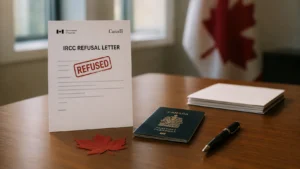
Examples of Misrepresentation IRCC is one of the most common reasons Immigration, Refugees and Citizenship Canada (IRCC) refuses or bans immigration applications.
Understanding what counts as misrepresentation and how you can avoid it, is important for anyone seeking to move to Canada. Below, we explore the top 10 real-world examples, their consequences, and how to prevent these costly mistakes.
What Is Misrepresentation in Canadian Immigration?
Under Section 40 of Canada’s Immigration and Refugee Protection Act (IRPA), misrepresentation means giving false, misleading, or incomplete information on your immigration application or during interviews with Examples of Misrepresentation IRCC, even if it’s accidental.
This includes:
- Omissions
- Forged or altered documents
- Incorrect details
- Withholding key facts
Whether intentional or not, misrepresentation is treated seriously by Canadian immigration authorities.es.
Why Does Examples of Misrepresentation IRCC Matter?
Examples of Misrepresentation IRCC uses the information you provide to make decisions about your eligibility. If the information is wrong, misleading, or incomplete, it can cause legal errors and seriously harm your chances of success. Even if someone made the mistake on your behalf, you are still responsible for everything submitted in your application.
Top 10 Examples of Misrepresentation IRCC in Canadian Immigration
1. Hiding Previous Refusals from Any Country
Example: You were refused a U.S. visitor visa in 2021 and don’t mention it on your Canada visa application.
Why it’s serious: Examples of Misrepresentation IRCC cross-checks with other countries. Failing to disclose any prior visa refusal (even outside Canada) is misrepresentation.
2. Using Fake or Altered Employment Letters
Example: Submitting a job offer or reference letter that you created or modified yourself to boost experience.
Why it’s serious: Examples of Misrepresentation IRCC verifies employers directly. Fake or altered documents result in immediate refusal and a 5-year ban.
3. Lying About Your Marital Status
Example: Applying as “single” to avoid paperwork when you are married or in a common-law relationship.
Why it’s serious: Misstating your marital status is a major red flag in both temporary and permanent applications.
4. Failing to Mention Family Members
Example: You don’t declare a spouse or dependent child on a PR application because they won’t accompany you.
Why it’s serious: Undeclared family members cannot be sponsored later. It also counts as misrepresentation.
5. Incorrect Study or Employment History
Example: Leaving out part-time or short-term jobs to simplify your resume or avoid documentation.
Why it’s serious: Gaps, inconsistencies, or omissions especially in Express Entry or LMIA applications can trigger background checks and refusals.
6. Submitting Fraudulent Language Test Results
Example: Using an IELTS certificate that you didn’t earn or modifying scores before submission.
Why it’s serious: Examples of Misrepresentation IRCC directly verifies test results with testing bodies. Fake results = automatic refusal and ban.
7. Withholding Medical Conditions
Example: Not disclosing a health condition that could be flagged during the medical exam.
Why it’s serious: Hiding medical information can lead to inadmissibility and potential removal from Canada.
8. Misleading Immigration Officers at the Border
Example: Telling the officer you’re visiting Canada as a tourist while planning to work or apply inland for PR.
Why it’s serious: Misleading at the port of entry (POE) can result in denied entry and notes on your immigration file.
9. Providing Fake Education Documents
Example: Submitting a degree or transcript from an unrecognized or fake institution in your country.
Why it’s serious: WES and other credential evaluators report discrepancies. Examples of Misrepresentation IRCC considers this a serious offense.
10. Using Unlicensed or Fraudulent Consultants
Example: Working with someone who fabricates documents or makes false claims on your behalf.
Why it’s serious: You are responsible for the accuracy of your application even if you didn’t know your consultant was unethical.
Consequences of Misrepresentation in Canadian Immigration
-
- Immediate refusal of your application
- Five-year ban from applying to Canada (inadmissibility under IRPA)
- Being flagged in the Global Case Management System (GCMS)
- Loss of current or future permanent resident or citizenship status
- Possible removal (deportation) from Canada
- Criminal charges in severe cases
How to Avoid Misrepresentation
-
- Be honest even about past mistakes or refusals. Full disclosure is always safer.
- Double-check all documents for accuracy and consistency before submitting.
- Disclose all past visa refusals, travel history, and employment gaps
- Work only with licensed RCICs or immigration lawyers
- Keep records of your application and what your consultant submitted
Need Immigration Help?
If you are worried about misrepresentation or want to avoid costly mistakes, contact an experienced, regulated Canadian immigration consultant at Can X Global. Ensuring your application is honest and error-free is the best way to protect your future in Canada.