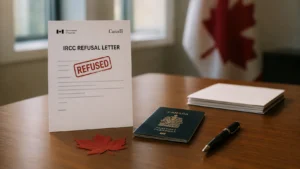
Receiving a refusal letter from Immigration, Refugees and Citizenship Canada (IRCC) can be discouraging, especially if you’ve invested time, money, and hope into your application. Whether you applied for a study permit, work permit, visitor visa, or permanent residence, it is important to remember that a refusal is not necessarily the end of the road. In many cases, it’s the first step in reassessing, improving, and reapplying with stronger documentation and clearer intent.
This blog explains how to properly read and understand an IRCC refusal letter, what the most common reasons for refusal mean, and how to act on the decision effectively.
Why IRCC Refuses Applications
IRCC officers are guided by Canadian immigration regulations, internal policies, and detailed application instructions. A refusal typically means the officer was not satisfied with the evidence provided to support your eligibility or intent.
Refusal reasons vary depending on the type of application, but the underlying causes often fall into the following categories:
-
- Incomplete or inconsistent documents
- Weak justification for temporary or permanent stay
- Concerns about ties to your home country
- Failure to meet program-specific eligibility criteria
- Past immigration violations or security issues
Understanding exactly what went wrong in your application is the first step to preparing a stronger submission in the future.
How to Read an IRCC Refusal Letter
Refusal letters typically include:
-
- A brief summary of your application
- A list of one or more standard refusal reasons
- An officer’s conclusion or assessment
- Instructions (if applicable) on what you can do next
Example Language:
“I am not satisfied that you will leave Canada at the end of your stay as a temporary resident, based on the purpose of your visit, your personal assets and financial status, and your family ties in Canada and in your country of residence.”
Each point corresponds to a section of the law or standardized criteria used in decision-making.
Common Refusal Reasons and What They Mean
1. Purpose of Visit Not Clearly Explained
This is common in visitor visa and study permit refusals. IRCC did not find your explanation of why you are visiting or studying in Canada to be convincing or credible.
What to do:
Clarify your travel or study plan in a well-structured personal statement. Show how your goals are temporary and connected to your personal or professional situation.
2. Insufficient Financial Support
IRCC was not satisfied that you can cover your living expenses, tuition (if applicable), or travel costs without working illegally or relying on public funds.
What to do:
Submit updated financial documents showing consistent income, savings, and a credible source of support such as a parent, employer, or sponsor.
3. Weak Ties to Home Country
Officers assess whether you have strong reasons to return home. If you do not demonstrate stable employment, family connections, or property, you may be seen as a potential overstay risk.
What to do:
Provide proof of job commitments, family obligations, academic enrollment, or assets like property or business ownership in your home country.
4. Inconsistent or Incomplete Documents
If your documents contradict one another or leave out important information, the officer may doubt your credibility.
What to do:
Review your application carefully for errors. Ensure that all forms, dates, and statements are consistent across documents. Include a cover letter that ties everything together.
5. Failure to Meet Program Criteria
This is more common in permanent residence applications under Express Entry or PNP streams. You may not have met the required points, work experience criteria, or language benchmarks.
What to do:
Check the specific requirements of the program you applied under. Consider improving your qualifications or reapplying under a different stream.
Next Steps After a Refusal
1. Request Your GCMS Notes
IRCC refusal letters are often brief and use standard templates. To fully understand the reasoning, request your Global Case Management System (GCMS) notes. These internal notes provide detailed insight into the officer’s thought process.
2. Assess Whether to Reapply, Appeal, or Respond
Depending on the type of application and reason for refusal, you may have options such as:
-
- Reapplying with improved documentation
- Filing an application for reconsideration (in rare cases)
- Appealing to the Federal Court or Immigration Appeal Division (for certain PR cases)
Note: Reapplying without addressing the original issues usually leads to repeated refusals.
3. Seek Professional Help
Many refusals result from errors that could have been avoided with proper legal advice. A licensed immigration consultant can:
-
- Review your refusal letter and GCMS notes
- Identify the weak areas in your original application
- Help you build a stronger case for reapplication
- Draft effective letters of explanation or legal submissions
Final Thoughts: A Refusal Is Not the End
A refusal from IRCC can feel overwhelming, but it is often a chance to re-evaluate your application and come back stronger. Understanding the real reasons behind the refusal and taking corrective action can make a significant difference in your next attempt.
If you have received a refusal letter and are unsure how to proceed, consider consulting with the licensed immigration professionals at Can X Global. We help clients understand their refusal in detail, obtain and interpret GCMS notes, and prepare strong, well-supported reapplications that address IRCC’s concerns.