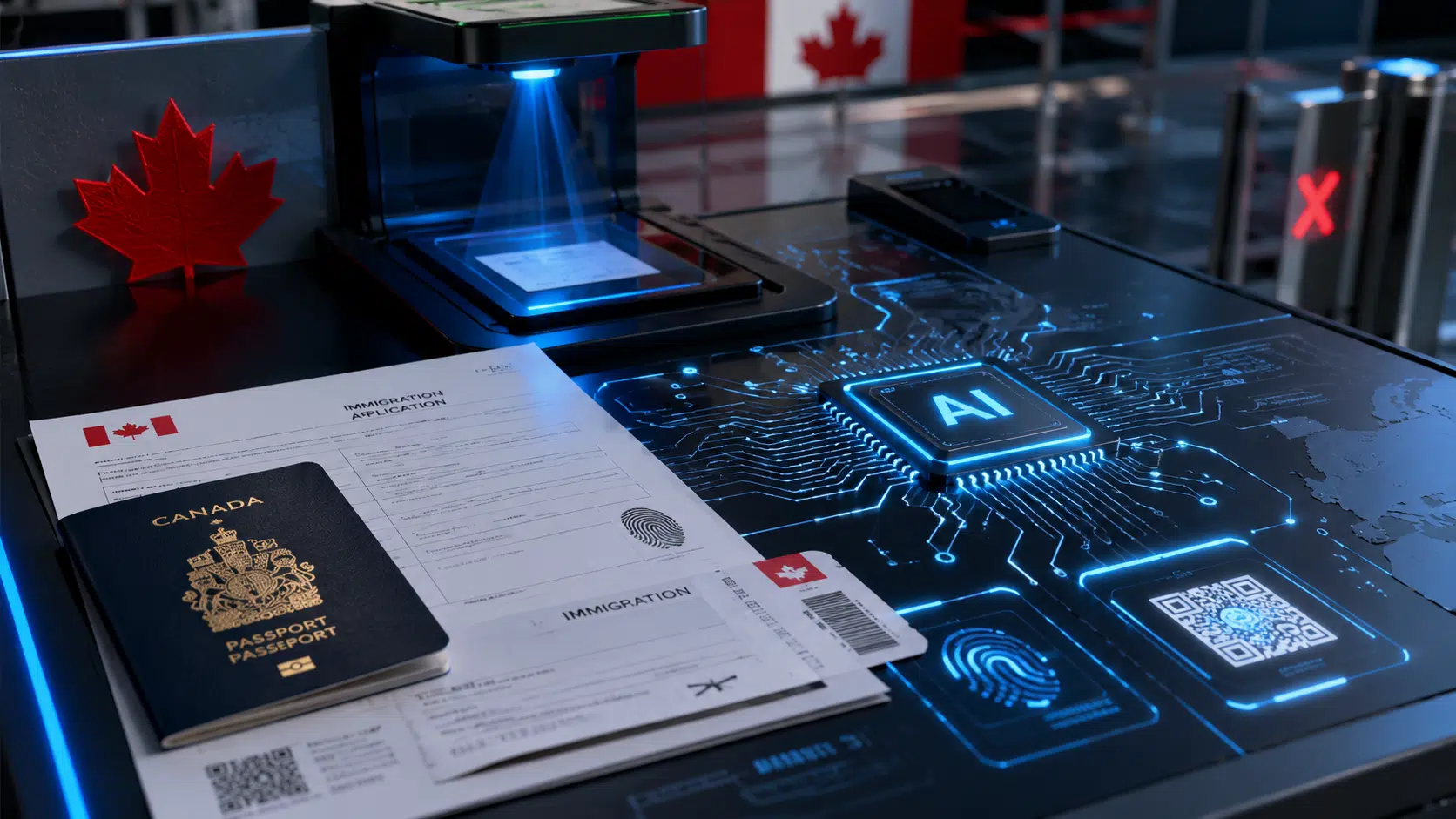
The immigration system has long been criticized for its complexity, backlogs, and inconsistencies. As artificial intelligence reshapes nearly every sector of society, it’s also beginning to transform how nations manage immigration—from application processing to border security to refugee resettlement. But this transformation raises important questions about fairness, privacy, and the human dimensions of one of the most consequential experiences in a person’s life.
The Current State of Immigration Systems
Immigration agencies worldwide process millions of applications annually, often with limited resources and mounting backlogs. In the United States alone, the backlog for immigration court cases exceeds 3 million. Officers must review mountains of documentation, verify identities, assess security risks, and make life-changing decisions—all while navigating complex, ever-changing regulations.
The human cost of these delays is substantial. Families remain separated for years, refugees wait in limbo, and skilled workers find their careers on hold. Meanwhile, immigration officers face crushing workloads that make thorough case reviews nearly impossible.
How AI Is Being Deployed
Governments and private companies are increasingly turning to AI to address these challenges. The applications span the entire immigration journey.
Application Processing and Document Review
AI systems can now scan and extract information from passports, birth certificates, and other documents in seconds. Natural language processing helps categorize applications, flag incomplete submissions, and route cases to appropriate officers. Some systems can even detect fraudulent documents by analyzing subtle patterns invisible to the human eye.
Canada’s immigration system uses AI to help screen Express Entry applications, assessing whether candidates meet basic eligibility criteria before human officers conduct deeper reviews. The goal is to free officers from routine data entry so they can focus on complex cases requiring judgment.
Border Security and Risk Assessment
Perhaps the most visible—and controversial—use of AI in immigration is at borders. Facial recognition systems now operate at airports and land crossings in many countries, matching travelers against databases in real time. Some nations use predictive algorithms to assess which travelers merit additional screening based on travel history, documentation, and other factors.
The European Union has deployed an AI-powered screening system called iBorderCtrl that analyzes micro-expressions and speech patterns to detect deception during automated interviews. Advocates argue such systems can identify security threats more reliably than overwhelmed border agents. Critics worry about accuracy, bias, and the dystopian implications of automated lie detection.
Integration and Settlement
Once immigrants arrive, AI is being used to support integration. Chatbots provide 24/7 answers to questions about housing, healthcare, and employment in multiple languages. Machine learning algorithms match refugees with appropriate settlement locations based on job markets, existing community ties, and available services. Language learning apps powered by AI help newcomers gain proficiency faster.
These tools can democratize access to information that was previously available only to those who could afford immigration lawyers or who had well-connected friends and family.
The Promise: Efficiency, Consistency, and Scale
The potential benefits of AI in immigration are significant. Processing times that once took months could shrink to weeks or days. Decisions could become more consistent, reducing the lottery-like randomness that currently characterizes some immigration systems. Officers could dedicate their expertise to the cases that genuinely need human judgment rather than drowning in paperwork.
For applicants, AI could mean less uncertainty and faster reunification with family members. For countries, it could mean better allocation of limited resources and improved security screening. For refugees fleeing danger, it could mean the difference between life and death if resettlement processes accelerate.
The Perils: Bias, Opacity, and Dehumanization
But the deployment of AI in immigration also raises serious concerns that demand careful attention.
Algorithmic Bias
AI systems learn from historical data, which means they can perpetuate and even amplify existing biases. If an algorithm is trained on past immigration decisions that reflected prejudice—conscious or unconscious—against certain nationalities, ethnicities, or socioeconomic groups, it will likely reproduce those patterns. Studies have shown that facial recognition systems perform worse on people with darker skin tones, potentially leading to higher false rejection rates for certain populations.
The stakes are particularly high in immigration, where algorithmic decisions can determine whether someone gains safety, opportunity, and a new life—or faces deportation, separation from family, or continued persecution.
Lack of Transparency
Many AI systems used in immigration operate as “black boxes.” Applicants are rarely told that AI influenced their case, let alone given insight into how the algorithm made its determination. This opacity makes it nearly impossible to identify errors, challenge unfair decisions, or hold systems accountable.
In traditional immigration proceedings, applicants typically have the right to know the basis for decisions against them and to present counterarguments. When AI systems make or influence these decisions without explanation, these procedural protections erode.
Over-Reliance on Technology
Immigration decisions involve nuanced human circumstances that may not fit neatly into algorithmic categories. A case might seem straightforward on paper but involve context—a medical emergency, a credible but undocumented threat, cultural factors affecting how someone presents information—that AI cannot fully grasp.
There’s also the risk that human officers, seeing an AI recommendation, will defer to it rather than conducting independent analysis. This automation bias could mean that errors or edge cases slip through, with devastating consequences for applicants.
Surveillance and Privacy
The same technologies that streamline immigration processes also enable unprecedented surveillance. Facial recognition databases, biometric collection, and data sharing between agencies create detailed profiles of immigrants. This information could be misused, hacked, or accessed by authoritarian regimes seeking to track dissidents and their families.
Striking the Right Balance
AI is not inherently good or bad for immigration—its impact depends entirely on how it’s designed, deployed, and governed. Several principles can help ensure that AI serves humanitarian values rather than undermining them.
1
Human Oversight Must Remain Central: AI should augment, not replace, human decision-makers in immigration cases. Algorithms can handle data processing and initial screening, but meaningful decisions—particularly those involving asylum claims, family separation, or deportation—should always include human review by trained officers who can consider context and exercise discretion.
2
Transparency and Accountability Are Non-Negotiable: Applicants should be informed when AI is used in their cases and given meaningful information about how these systems work. They should have the right to challenge algorithmic determinations and receive explanations for decisions. Immigration agencies should be required to conduct regular audits for bias and publish results.
3
Equity Must Be Built In, Not Bolted On: AI systems should be designed from the ground up with equity in mind, involving diverse stakeholders including immigrants themselves. Training data must be carefully curated to avoid perpetuating historical biases. Performance metrics should include equity measures, and systems should be tested rigorously across different demographic groups before deployment.
4
Privacy Protections Must Be Robust: Biometric data and personal information collected through AI systems should be subject to strict controls on storage, access, and sharing. Immigrants should have rights over their data similar to those enjoyed by citizens, and information should not be accessible to governments with poor human rights records.
Looking Ahead
The integration of AI into immigration systems is not a question of if, but how. The technology offers genuine potential to make these systems more efficient and fair—reducing backlogs, speeding up processing times, and freeing human officers to focus on complex cases.
But realizing this potential requires vigilance, ongoing evaluation, and a commitment to keeping human dignity at the center of immigration policy. The measure of success should not be processing speed alone, but whether these systems ultimately serve the wellbeing of the people they affect.
Immigration is fundamentally about people—their hopes, their fears, their search for safety and opportunity. As we deploy powerful new technologies in this domain, we must ensure they enhance rather than diminish our humanity. The algorithms we build today will shape the lives of millions of people tomorrow. That’s a responsibility we cannot afford to automate away.
What’s your take on AI in immigration? Do the efficiency gains outweigh the risks, or do we need to pump the brakes? The conversation is just beginning.