
Student With No Income: Can I Sponsor My Spouse to Canada?
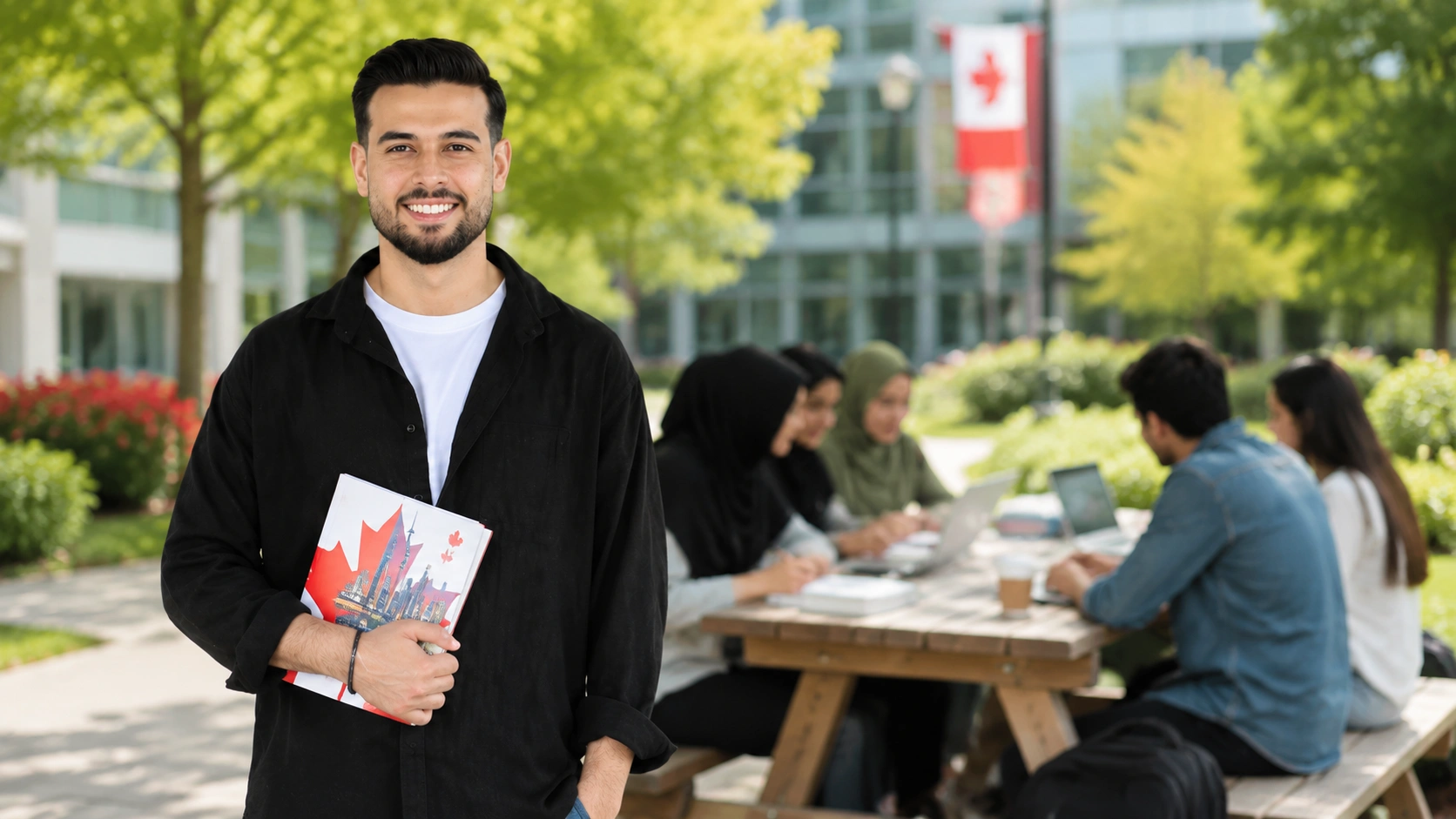
You are studying in Canada, your income is minimal or non-existent, and you are wondering whether the door to sponsoring your spouse is simply closed. You are Canadian or a permanent resident, but you are not earning a salary right now and you are not sure whether that rules you out.
The answer depends on a few things: what type of status you hold in Canada, whether you are receiving social assistance, and what the overall financial picture looks like. Here is what the rules actually say.
Wondering if your situation qualifies?
The Basic Eligibility Requirement
To sponsor a spouse or common-law partner, you must be a Canadian citizen or a permanent resident of Canada, be 18 years of age or older, and be residing in Canada (for permanent residents). You must also not be receiving provincial or territorial social assistance, except for a disability.
There is no minimum income requirement for spousal sponsorship. Being a student with low income does not automatically make you ineligible. What matters is whether you are receiving social assistance and whether you can meet the undertaking obligations.
The Social Assistance Disqualifier
The most relevant rule for students is the social assistance disqualifier. If you are currently receiving provincial or territorial social assistance, you are not eligible to sponsor. Student loans and bursaries are not social assistance. Federal student grants are not social assistance. EI is not social assistance.
Provincial social assistance programs, sometimes called welfare or income support depending on the province, are the specific category that triggers ineligibility. If you are a student receiving provincial assistance beyond what your province classifies as student support, this disqualifier applies.
If you are supporting yourself through student loans, part-time work, family support, savings, or scholarships, the social assistance disqualifier does not apply and you are not automatically ineligible on the basis of your income.
Need a personalized review of your file?
What About the Undertaking If You Have No Income?
Signing the sponsorship undertaking commits you to financially supporting your spouse if they cannot support themselves. An officer reviewing a sponsorship from a student with no current income will assess whether you realistically have the ability to meet this commitment.
A student who has been in school for two years with no income history and no assets is in a weaker position than a student who worked full-time for several years before starting school and has a clear return to employment path. The financial assessment is qualitative, and the overall picture matters.
The key question IRCC is implicitly asking is: if this sponsored person needed financial support, could the sponsor realistically provide it? For some students, the honest answer is yes, supported by prior income history, future employment prospects, or family financial support. For others, the answer is genuinely uncertain.
Does Your Immigration Status as the Sponsor Matter?
Yes. There is a meaningful difference between a Canadian citizen who is currently a student and a permanent resident who is currently a student.
Canadian citizens can sponsor from inside or outside Canada. A Canadian citizen who is studying abroad can sponsor their spouse as an outland application without needing to be physically in Canada.
Permanent residents must be residing in Canada to sponsor. A permanent resident who is studying in Canada can sponsor, subject to the usual financial assessment. A permanent resident studying abroad cannot sponsor until they return to Canada.
Have questions about your specific case?
What If You Graduate and Find Work During Processing?
If you file your sponsorship application while a student and find employment during the processing period, update your file with the new employment information. A letter from your employer confirming your position and salary, along with pay stubs once available, documents the change in your financial situation.
Sponsorship processing takes months. A student who files close to graduation and begins working before the application is decided can present a meaningfully stronger financial picture at the decision stage than at the filing stage. This timing consideration is worth factoring into when you submit the application.
About the Author
Anuj Sengar (AJ) is the Founder and Licensed RCIC (R515178) at Can X Global Solutions. Licensed by the College of Immigration and Citizenship Consultants since February 2016, he has served 10,000+ clients from 30+ countries. CAPIC R2117054. Completed Generative AI for Business at University of Toronto Rotman, 2025.
FAQ
I receive a scholarship and student loans. Do those count as income for sponsorship purposes?
Student loans are not income and are not counted in IRCC’s income assessment, as they are debt, not earnings. Scholarship income may be reported on your tax return and visible on your NOA. Whether IRCC treats scholarship income as meaningful financial support depends on the amount and stability. Neither scholarships nor student loans trigger the social assistance disqualifier, so you are not made ineligible by receiving them. The question is whether your overall financial picture is sufficient to support the undertaking.
My parents would support us financially if needed. Can they be listed as co-sponsors?
Spousal sponsorship in Canada does not have a formal co-sponsor mechanism in the same way some other immigration categories do. The undertaking is the sponsor’s obligation. Parental financial support can be a contextual factor, but a letter from your parents saying they would help is not a formal co-sponsor arrangement that IRCC recognises as replacing the sponsor’s own financial capacity. Professional advice on whether your specific situation allows for any alternative financial support documentation is worthwhile.
I graduated six months ago and just started my first job. Is that enough employment history?
Six months of employment history in your first job is a thin but not empty record. Your most recent NOA may still reflect student-era income rather than your current employment. Supplementing your NOA with a current employment letter, recent pay stubs, and a brief explanation of your career start date helps IRCC understand that your current financial situation is materially different from what the NOA reflects. The goal is to give the officer an accurate and complete picture of where you stand financially right now.
Being a student does not close the door on sponsoring your spouse. It does mean your application needs to be structured carefully. Can X Global has been helping sponsors in non-standard financial situations navigate the process since 2016. Book a assessment.
Need help preparing your application correctly?
Related Articles
Top Stories
Inland vs Outland Spousal Sponsorship Canada 2026: Which Stream Is Right for You?
Family Sponsorship
Spousal Open Work Permit Canada 2026: How to Work While Your PR Is Processing
Family Sponsorship
Who Can Sponsor a Spouse to Canada in 2026: Full Eligibility Guide
Family Sponsorship
Spousal Sponsorship Canada Documents Checklist 2026
Family Sponsorship
Get Expert Immigration Advice
10+ years helping clients achieve Canadian permanent residency.
Book a Consultation
[astra_custom_layout id=5690]
Get a Consultation
Most Read

Inland vs Outland Spousal Sponsorship Canada 2026: Which Stream Is Right for You?

Spousal Open Work Permit Canada 2026: How to Work While Your PR Is Processing

Who Can Sponsor a Spouse to Canada in 2026: Full Eligibility Guide

Spousal Sponsorship Canada Documents Checklist 2026