
Spouse’s Visitor Visa Refused During Sponsorship: What Now?
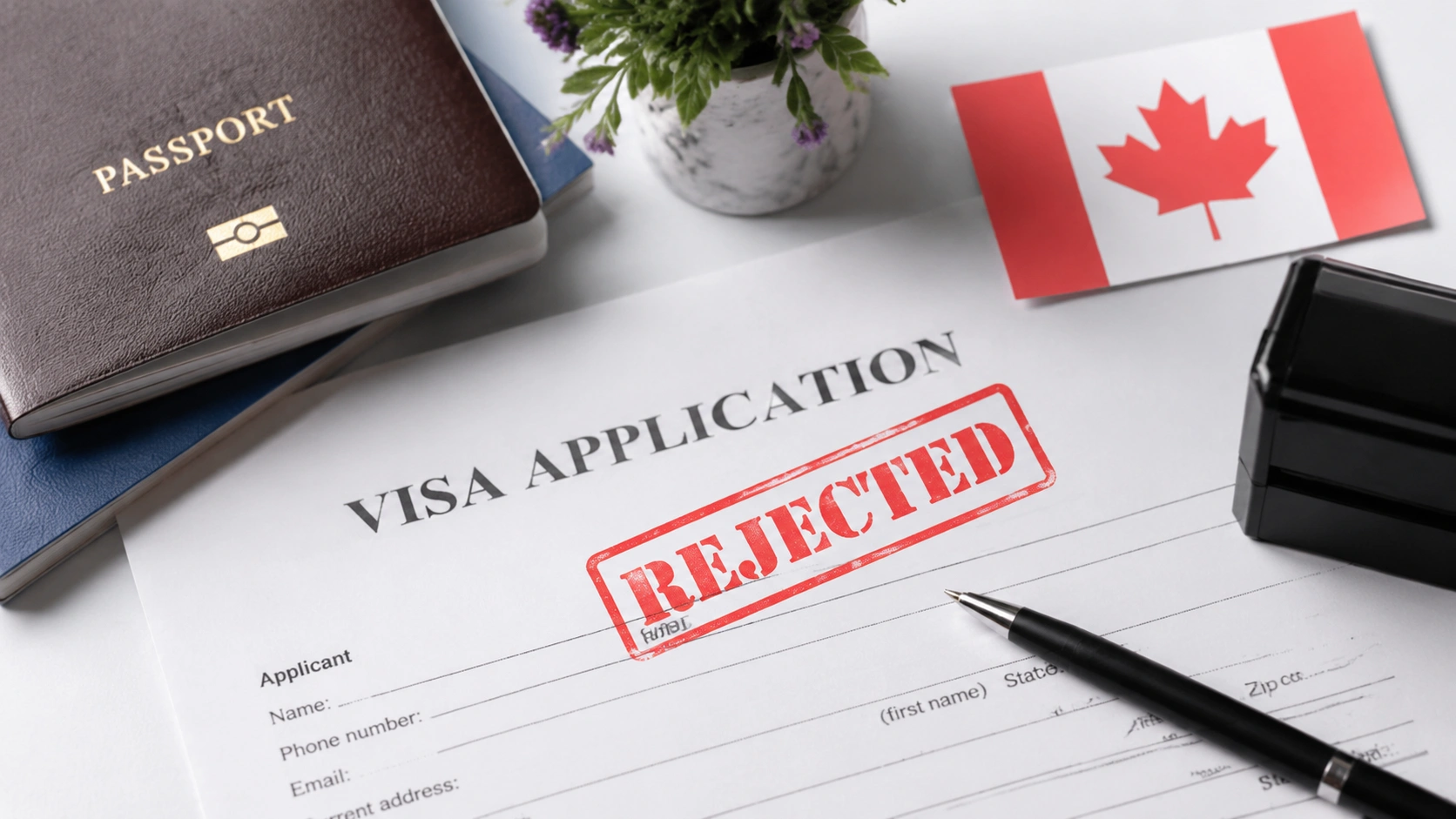
The visitor visa application was supposed to bridge the gap while you wait. Instead, you got a refusal letter. You are now further apart than before and wondering whether this is going to hurt the sponsorship application, and what, if anything, you can do about it.
A visitor visa refusal during an active sponsorship is a stressful situation, but it has defined options. Here is what the refusal means, what it does not mean, and what you can do from here.
Wondering if your situation qualifies?
Does the Visitor Visa Refusal Hurt the Sponsorship Application?
A visitor visa refusal does not automatically damage the sponsorship application. Visitor visas and spousal sponsorship applications are assessed by different officers using different frameworks. A visa officer refusing a temporary resident application is assessing the person’s temporary intent and ties to their home country. A sponsorship officer is assessing the genuineness of the relationship and the sponsor’s eligibility.
These are different questions with different evidentiary standards. An officer who refused a visitor visa because they were not satisfied the applicant would leave Canada at the end of the visit is not making a finding about whether the relationship is genuine.
That said, the refusal is on record and will be visible to IRCC throughout the sponsorship process. If the sponsorship is approved and the refusal raises a question, the context of an active sponsorship at the time of the visitor application is explanatory. The refusal alone is not a bar to sponsorship approval.
Why Do Visitor Visas Get Refused During Active Sponsorship Applications?
The most common reason a visitor visa is refused when a sponsorship is pending is that the visa officer was not satisfied that the applicant had sufficient ties to their home country or sufficient reasons to return there after the visit.
The pending sponsorship application actually complicates the visitor visa assessment, because it demonstrates that the applicant has a strong intention to remain in Canada permanently. Even with the dual intent framework, an officer can conclude that in this particular case the temporary intention is not credible alongside the active permanent residence pathway.
Other reasons for refusal include:
- Insufficient financial documentation to support the visit
- A travel history that raises concerns about compliance with immigration conditions in other countries
- Inconsistencies between the visitor visa application and information on file from the sponsorship
- The applicant’s country of citizenship carrying a high structural refusal rate
Need a personalized review of your file?
Can You Reapply for a Visitor Visa After a Refusal?
Yes. A visitor visa refusal is not permanent. You can reapply as many times as circumstances allow. The question is whether reapplying with the same information produces the same result.
A successful reapplication typically requires addressing the specific reasons for the refusal. GCMS notes, which are internal IRCC processing notes available through an Access to Information request, can provide detail on exactly why the refusal was issued. Requesting these notes before reapplying gives you the most targeted information for building a stronger second application.
What a stronger reapplication might include:
- More documentation of home country ties: employment letters, property documents, family obligations, financial accounts
- A clearer itinerary for the proposed visit, including prepaid accommodation and return flight
- A direct acknowledgement of the pending sponsorship and an explanation of why the visit is for a specific, temporary purpose
- Updated financial documentation showing the capacity to support the visit independently
What Is a Temporary Resident Permit?
A Temporary Resident Permit is a document issued by IRCC that allows a person who is otherwise inadmissible or would not ordinarily qualify for a temporary visa to enter or remain in Canada for a specific purpose and period. A TRP is issued at the discretion of an officer and requires the applicant to demonstrate that the reason for the visit outweighs the immigration concerns.
A TRP is not a visitor visa and should not be treated as an easy alternative. It is a discretionary document for exceptional circumstances. A couple that has been separated for an extended period due to repeated visitor visa refusals, and can document the hardship of that separation, is among the circumstances where a TRP application has a basis.
TRP applications can be submitted from outside Canada or at a port of entry. Processing times vary. If the underlying reason for the visitor visa refusal has not changed, a TRP application needs to make the case for why the humanitarian circumstances of this specific situation warrant an exception.
Have questions about your specific case?
Does the Refusal Affect Future Visitor Visa Applications?
Yes. Each refusal is recorded and must be declared in all future temporary resident applications, and in the sponsorship application if not already declared. Multiple refusals create a record that officers review when assessing future applications. A pattern of refusals is harder to overcome than a single one, particularly if the same concerns are cited repeatedly without a change in circumstances.
The most effective response to a refusal is addressing the actual reason for it before reapplying, not simply submitting the same application again.
Should You Attempt Another Visitor Visa or Focus on the Sponsorship?
This is a judgment call that depends on your specific situation:
- If the sponsorship is close to a decision, the case for investing significant time and resources in another visitor visa application is weaker. The separation will end soon through the PR process.
- If the sponsorship is at an early stage and the separation is likely to extend for another year or more, the case for pursuing a visitor visa or TRP more actively is stronger.
- If the refusal was based on a specific, correctable weakness, fixing that weakness and reapplying is a reasonable approach.
- If the refusal reflects a structural challenge with the applicant’s country of citizenship, repeated applications without a meaningful change in the application are unlikely to produce a different result.
About the Author
Anuj Sengar (AJ) is the Founder and Licensed RCIC (R515178) at Can X Global Solutions. Licensed by the College of Immigration and Citizenship Consultants since February 2016, he has served 10,000+ clients from 30+ countries. CAPIC R2117054. Completed Generative AI for Business at University of Toronto Rotman, 2025.
FAQ
The refusal letter does not explain why the visa was refused. How do we find out?
Visitor visa refusal letters from IRCC often cite only general reasons. The detailed reason for the refusal is in the officer’s GCMS notes. You can request these through an Access to Information and Privacy request submitted to IRCC. Processing the request takes time, typically several weeks to a few months, but the information in the notes is often the only way to understand what specifically led to the refusal and how to address it.
Can we include documentation of the visitor visa refusal in the sponsorship application?
If the refusal has not already been declared, it must be declared in the sponsorship application. Attempting to conceal a prior refusal creates misrepresentation risk that is far more serious than the refusal itself. If the refusal is already on file with IRCC, the sponsorship officer will see it regardless. Including a brief explanation of the circumstances of the refusal, and the context of the active sponsorship at the time, is generally advisable.
My spouse from a country with a high refusal rate has now been refused twice. Is there any point in reapplying?
Two refusals without a change in circumstances typically produce the same result. Before reapplying a third time, it is worth getting a professional assessment of the application to identify whether there is a specific weakness that can be addressed, or whether the structural refusal rate of the applicant’s country makes further visitor visa attempts unlikely to succeed. In the latter case, focusing on the sponsorship timeline and considering a TRP for an extended separation hardship may be the more productive approach.
A visitor visa refusal during a pending sponsorship is one of the most frustrating parts of an already difficult waiting period. Can X Global can review the refusal and advise on the best path forward. Book a assessment.
Need help preparing your application correctly?
Related Articles
- Can my spouse visit Canada during processing?
- My spouse is stranded and cannot get a visa
- Prior visa refusal and admissibility concerns
- Dual intent and Canadian immigration
Top Stories
Inland vs Outland Spousal Sponsorship Canada 2026: Which Stream Is Right for You?
Family Sponsorship
Spousal Open Work Permit Canada 2026: How to Work While Your PR Is Processing
Family Sponsorship
Who Can Sponsor a Spouse to Canada in 2026: Full Eligibility Guide
Family Sponsorship
Spousal Sponsorship Canada Documents Checklist 2026
Family Sponsorship
Get Expert Immigration Advice
10+ years helping clients achieve Canadian permanent residency.
Book a Consultation
[astra_custom_layout id=5690]
Get a Consultation
Most Read

Inland vs Outland Spousal Sponsorship Canada 2026: Which Stream Is Right for You?

Spousal Open Work Permit Canada 2026: How to Work While Your PR Is Processing

Who Can Sponsor a Spouse to Canada in 2026: Full Eligibility Guide

Spousal Sponsorship Canada Documents Checklist 2026