Being refused a Canadian study visa can be disappointing, especially after investing time, money, and hope into your education plans. But a refusal doesn’t mean your journey is over. You may still be eligible to reapply successfully, provided you understand what went wrong and take the necessary steps to strengthen your next application.
This blog will guide you through the process of reapplying after a study visa refusal and explain how to increase your chances of approval.
Common Reasons Why Study Permits Get Refused
Before you reapply, you must understand the reasons behind the refusal. The most common refusal grounds include:
1. Lack of Strong Proof of Intent to Return to Home Country
IRCC must be convinced that you are a temporary resident who will leave Canada at the end of your studies. If your ties to your home country (job, property, family) are weak or unclear, officers may suspect that you plan to overstay.
2. Unclear or Weak Study Plan (SOP)
A poorly written or vague Statement of Purpose can lead to rejection. Your SOP must clearly explain:
-
- Why you chose Canada
- Why you chose your specific program and institution
- How this program fits into your future career goals
3. Financial Insufficiency
You must prove that you can afford:
-
- Tuition for the first year
- Living expenses for yourself (and dependents, if applicable)
- Return transportation
Weak financial documentation or inconsistent fund sources often lead to refusals.
4. Concerns About Program Relevance
If your chosen program does not align with your academic background or professional history, IRCC may doubt the genuineness of your study intentions.
5. Questionable Travel or Immigration History
Past visa refusals, overstays, or gaps in travel history can impact the officer’s decision if not properly explained.
Step-by-Step Guide to Reapply After a Study Visa Refusal
Step 1: Read the Refusal Letter
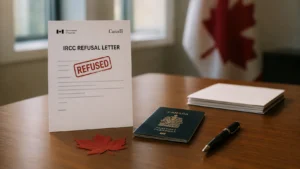
Start by reviewing the official refusal letter from IRCC. This letter outlines the general reasons for refusal, which may include statements such as:
-
- “You have not demonstrated that you will leave Canada at the end of your stay.”
- “Your proposed studies are not reasonable in light of your qualifications and past studies.”
While helpful, the letter is usually broad and not detailed.
Step 2: Order Your GCMS Notes
To understand the exact reasoning behind your refusal, you should request GCMS (Global Case Management System) notes. These are internal notes written by the visa officer that provide:
-
- Detailed concerns and observations
- Comments about your documents, SOP, and financials
- Specific reasons that led to the decision
It usually takes 30 days to receive your GCMS notes. Do not rush to reapply until you have this information.
Step 3: Analyze and Address the Weak Points
Once you receive your GCMS notes, analyze them carefully. Ask yourself:
-
- Did I explain my study plan clearly?
- Were my financial documents complete and consistent?
- Did I submit enough proof of home ties?
- Did I make any errors or submit outdated documents?
Use this insight to prepare a much stronger and tailored application.
Step 4: Rebuild Your SOP (Statement of Purpose)
Your new SOP must:
-
- Respond directly to the concerns raised in the refusal
- Show clear alignment between your academic background, chosen program, and future goals
- Emphasize your temporary intent and strong ties to your home country
- Explain any unusual elements (career gap, program change, previous refusal)
A well-structured SOP can be the deciding factor between a second refusal and an approval.
Step 5: Strengthen Financial Documentation
Submit updated and clear proof of funds. This should include:
-
- Bank statements for at least 3–6 months
- Proof of income (yours or your sponsor’s)
- Education loan letters (if applicable)
- Affidavit of support from family members or sponsors
- GIC (Guaranteed Investment Certificate) for SDS applicants
Make sure your documents show both the source and stability of funds.
Step 6: Choose the Right Stream (SDS vs. Non-SDS)
If you are from an eligible country, apply under the Student Direct Stream (SDS). SDS applications are processed faster and have higher approval rates, provided all criteria are met:
-
- IELTS score of 6.0 or higher in each band
- GIC of CAD $10,000
- Full first-year tuition payment
- Medical exam and biometrics
Tips to Improve Your Reapplication Success Rate
-
- Avoid repeating the same application. IRCC keeps records of past refusals. Make sure your new application is meaningfully improved.
- Explain your previous refusal in a cover letter. Be respectful, factual, and constructive in your response.
- Provide strong home ties. Include family commitments, property documents, job letters, or future plans outside Canada.
- Consult a licensed immigration consultant to review your revised application.
Can You Reapply Immediately After Refusal?
Yes. There is no mandatory wait period after a study permit refusal. But reapplying too quickly without addressing the reasons for refusal often leads to repeated denials. Take the time to properly rebuild your case.
Frequently Asked Questions
Q: Will my second application be rejected again because of the first refusal?
Not necessarily. If your second application is stronger, well-prepared, and addresses the officer’s concerns, it can still be approved.
Q: Can I apply for a different program or college?
Yes, especially if the new program better aligns with your background or career goals. Just make sure to explain the change clearly.
Q: Should I change my country of application (visa office)?
Sometimes applicants change their location (e.g., applying from another country or from within Canada), but this is not always necessary or helpful unless it significantly improves your supporting documents.
Final Thoughts: A Refusal Is Not the End
A Canadian study permit refusal can feel like a major setback, but many students successfully reapply and are later approved. The key is to:
-
- Understand why your application was refused
- Use GCMS notes to identify exact issues
- Submit a stronger, clearer, and more complete application
- Get expert advice to avoid further mistakes
If you need help rebuilding your application after a study permit refusal, contact Can X Global. Our team can guide you through GCMS analysis, SOP improvements, financial documentation, and a full reapplication strategy tailored to your situation.
Let us help you turn your refusal into a successful new beginning.