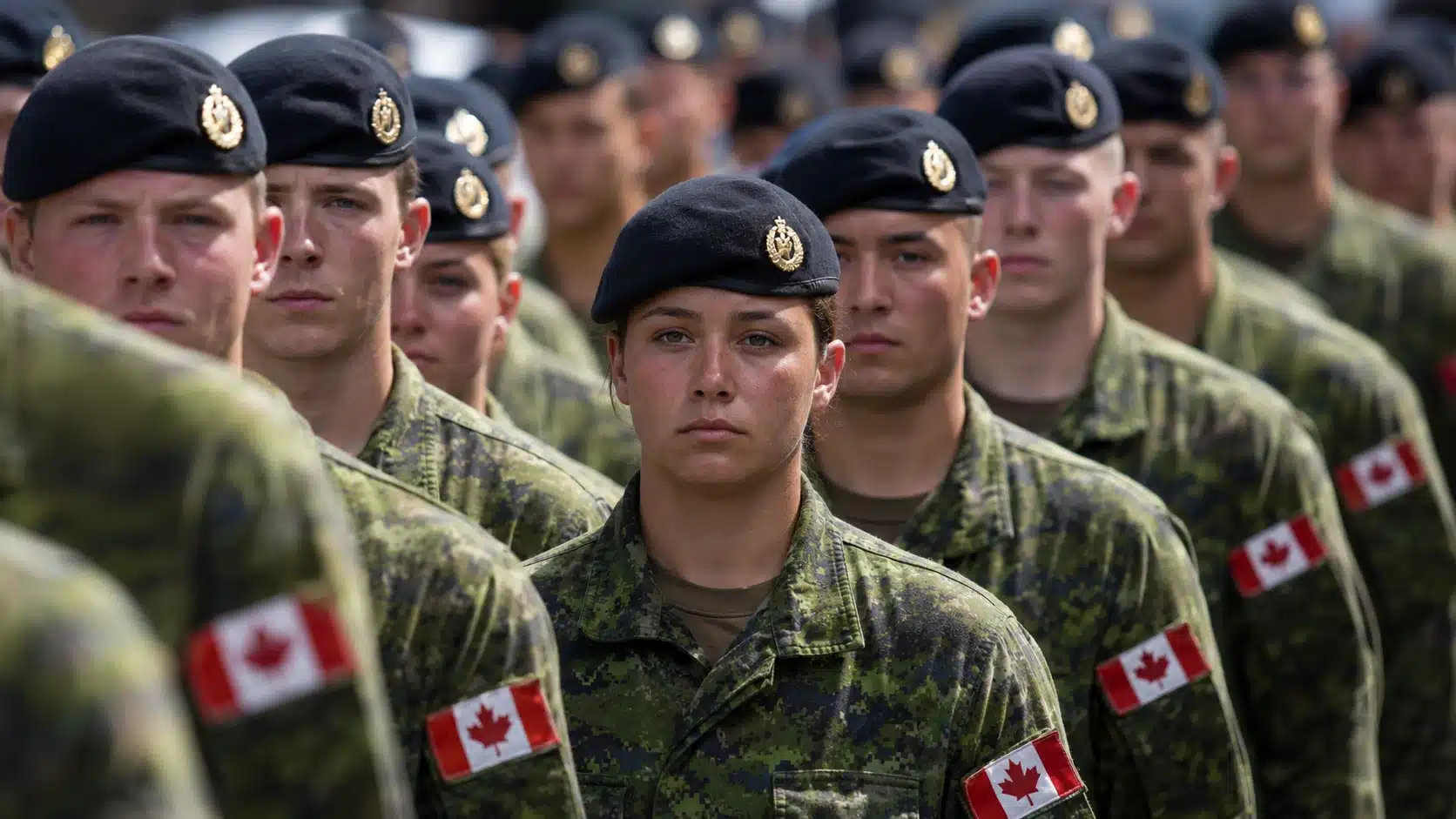
Immigration policy and national defence have rarely intersected as directly as they do in 2026. Canada’s new Express Entry category for skilled military recruits for the Canadian Armed Forces represents a genuinely unprecedented approach — one that uses the permanent residence pathway as a strategic tool for building Canada’s defence workforce.
This is not a category for anyone who has served in a military anywhere in the world. It is highly targeted, requires a direct recruitment relationship with the Canadian Armed Forces, and is tied to specific operational roles that Canada has determined it cannot fill through domestic supply alone. This blog explains everything currently known about this category, who it is designed for, and what it means for Canada’s immigration and defence landscape going forward.
The Policy Context: Canada’s Defence Industrial Strategy
To understand why this category exists, you need to understand the strategic environment that gave rise to it. Canada has faced sustained international pressure to increase its defence spending and capabilities, particularly from NATO allies. Prime Minister Mark Carney’s government has made the Defence Industrial Strategy a key pillar of its economic and security platform — and that strategy has a significant workforce dimension.
The Canadian Armed Forces faces structural challenges in recruiting and retaining personnel across a range of specialized roles. These challenges are not unique to Canada — most NATO member countries have faced similar difficulties as they compete with private sector salaries for technically skilled individuals. For highly specialized roles — military physicians, nurses, pilots, and allied defence professionals — the domestic supply of qualified candidates is simply insufficient.
The immigration solution is both logical and efficient. Rather than spending years training individuals from scratch in highly specialized roles that require extensive prior expertise, Canada can recruit already-qualified foreign professionals and offer them both employment in the CAF and a direct pathway to Canadian permanent residence. The Express Entry military recruits category is the immigration infrastructure that makes this strategy operational.
Who Qualifies: The Recruitment Requirement
This is the most critical distinguishing feature of the military recruits category: it requires a formal recruitment relationship with the Canadian Armed Forces. This is not a category that applicants can pursue independently based on their military background. You must have been specifically recruited by the CAF for an eligible role.
The eligibility pathway works as follows: The Canadian Armed Forces identifies international professionals with the specific skills and qualifications it needs. It initiates a recruitment process with those individuals. Successful recruits receive formal offers of employment or service commitments from the CAF. Those recruits then become eligible to apply under the Express Entry military recruits category.
For most people reading this blog, the practical question is: how does one become a CAF military recruit? The answer is through the CAF’s international recruitment programs, which target specific occupational profiles. If you have a professional background that aligns with CAF priority roles — particularly as a physician, nurse, or pilot — and you are interested in military service in Canada, the first step is direct engagement with Canadian Armed Forces recruiting offices.
Additional eligibility requirements beyond the standard 12-month work experience threshold exist for this category but have not been fully published. Given the nature of the category, security clearance and other defence-specific vetting requirements are expected to apply.
Priority Roles: Military Doctors, Nurses, and Pilots
The Canadian government’s February 18, 2026 announcement specifically identified three categories of roles as priorities under the military recruits category:
Military Physicians
The CAF operates a network of medical clinics and field hospitals that serve Canadian Armed Forces members. Military physicians provide primary care, occupational medicine, and operational medical support. The shortage of physicians in the CAF parallels the broader Canadian healthcare system’s physician shortage — and this category addresses both simultaneously.
Military Nurses and Allied Healthcare Professionals
Nursing officers are among the most critical healthcare personnel in the CAF’s medical services. They provide care in both garrison settings and deployed environments. Allied health professionals including physiotherapists, mental health practitioners, and medical technicians are also understood to be within scope.
Military Pilots
The Royal Canadian Air Force operates a fleet of fixed-wing and rotary-wing aircraft that require extensively trained pilots. Recruiting internationally trained pilots with military aviation backgrounds — particularly those qualified on aircraft types also operated by the RCAF — provides an efficient pathway to operational capability.
The category may also extend to other specialized roles as the CAF’s operational needs evolve, but the three categories above represent the confirmed priority areas.
What This Means for Foreign Military Veterans and Serving Personnel
For foreign military professionals — whether currently serving or veterans — this category raises important questions and opportunities. A military physician currently serving in a NATO ally country, a military nurse in an allied nation, or a military pilot with a relevant aircraft type rating all represent exactly the profiles the CAF is looking to recruit.
The pathway from interest to immigration under this category requires proactive engagement with the CAF recruiting system. There is no passive Express Entry pool mechanism that will automatically identify you as a military professional and issue you an ITA. The recruitment relationship must be established first, and the immigration process follows from that relationship.
If you are a foreign military professional interested in the possibility of serving in the Canadian Armed Forces, we recommend reaching out directly to the CAF’s recruiting centers, contacting the Canadian Embassy or High Commission in your country for guidance, and consulting with a Canadian immigration professional who can advise on how the immigration component of the pathway would work in your specific situation.
The Unprecedented Nature of This Category
It is worth pausing to appreciate just how historically unusual this category is. In over a decade of Express Entry operation since its 2015 launch, immigration policy and defence policy have remained almost entirely separate domains. The idea that Canada would create a dedicated permanent residence pathway specifically tied to Canadian Armed Forces recruitment is genuinely new.
This reflects a broader shift in how Canada thinks about immigration — not merely as a humanitarian or family reunification system, but as a strategic instrument of national policy. Just as category-based draws are now used to fill healthcare gaps, address STEM workforce needs, and retain researchers, the military category represents the application of the same logic to national defence.
The long-term significance should not be understated. If this category proves effective — if it successfully attracts and retains needed defence professionals — it will likely be expanded and refined in subsequent years. It sets a precedent for using the Express Entry system as an active workforce planning tool across an even broader range of national priority sectors.
Immigration Status During CAF Service: What to Expect
Candidates recruited under this category will need to navigate both their employment relationship with the CAF and their immigration process. Work authorization for CAF service — whether on a work permit or under another status — is a distinct question from the PR application process itself.
Typically, international recruits in the CAF would enter on a work permit tied to their CAF employment while the Express Entry PR process proceeds. The exact mechanism — open work permits, employer-specific permits, or other authorizations — will depend on the CAF’s employment agreements and IRCC’s operational procedures for this new category.
Given the highly specialized and security-sensitive nature of CAF employment, the immigration process for military recruits will likely involve additional steps and timelines compared to standard Express Entry applications. Candidates should plan for the process to take longer and should ensure they have appropriate temporary status throughout.