







LMIA for Trucking and Logistics Companies in Canada 2026: The Complete Employer Guide to Hiring Foreign Drivers

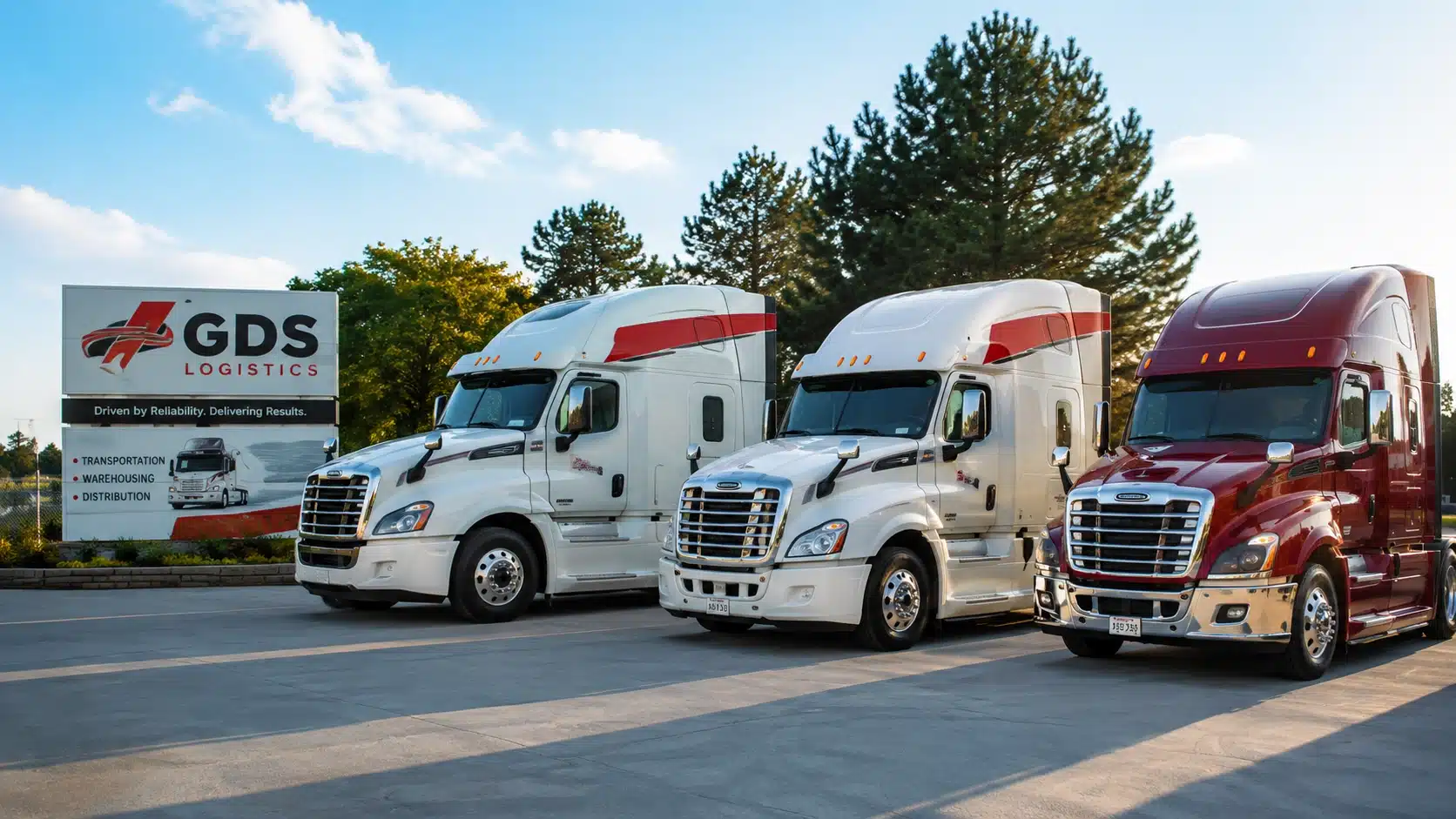
Canada’s commercial transport sector is in a structural labour crisis that has been building for a decade and has not been resolved by any domestic policy response to date. The Canadian Trucking Alliance has published estimates suggesting that Canada needs to hire tens of thousands of additional truck drivers over the next several years simply to maintain current freight movement capacity, let alone support growth in e-commerce fulfillment, construction material delivery, and food supply chain logistics.
The demographic reality is stark: a large cohort of Canadian truck drivers is approaching retirement age. Younger Canadians have not entered trucking trades at sufficient rates to replace them, partly because of lifestyle considerations around long-haul driving, partly because of the significant investment in training and licensing required before a new driver can operate a Class 1 vehicle, and partly because wages in the sector have not historically compensated for these factors at levels that attract domestic applicants in adequate numbers.
For transport companies, the LMIA is not a preferred approach to workforce development. It is a necessary operational reality for companies that cannot source enough qualified Canadian drivers to keep their fleets running. The question is not whether to use the LMIA but how to use it correctly, compliantly, and in a way that ultimately builds a stable workforce.
The Licence Problem: The Most Critical Pre-LMIA Planning Element
Of all the sector-specific complexities in trucking LMIA applications, the most operationally significant is the provincial commercial vehicle licensing requirement. In Canada, all provinces and territories issue their own Class 1 (air brake, full commercial tractor-trailer) and Class 3 (straight truck) licences, and a foreign driver cannot legally operate a commercial vehicle in Canada until they hold the applicable provincial licence.
How Foreign Licences Are Treated
Canada does not have a national system for recognizing foreign commercial driving credentials in the same way that some countries treat foreign licences. Each province has its own rules for foreign commercial licence assessment and conversion. Most provinces require foreign drivers to complete a written knowledge test in English or French, a practical skills test administered by a provincial examiner, and in some cases a formal training program at an accredited truck driver training school.
The timing implication is critical: a foreign truck driver who arrives in Canada on an LMIA-based work permit is not legally authorized to drive a commercial vehicle until their provincial licence is in hand. The licence testing and issuance process can take weeks to months depending on the province, the testing backlog, and the driver’s ability to pass the knowledge and skills tests. During this period, the driver is in Canada, being paid under the LMIA conditions, but cannot perform the primary duty of the position.
Employers who have not planned for this gap are caught with a worker in the country, an active work permit and LMIA consuming their regulatory capacity, and no productive output from the position until the licence is obtained. The solution is to factor provincial licensing timelines into the overall plan and to ensure that the driver has studied the applicable province’s Class 1 licence handbook and prepared for the knowledge test before arrival in Canada.
The Air Brake Endorsement
Most long-haul transport positions require an air brake endorsement on the Class 1 licence. Provincial air brake examinations are separate from the base Class 1 test in some provinces and must be completed before the driver can operate a vehicle with air brakes. Transport employers who are hiring drivers for air-brake-equipped tractors must confirm that the provincial licence pathway their foreign hire will follow includes the air brake endorsement, not just the base commercial licence.
The Z Endorsement and Special Configurations
Certain transport categories, including oversized load transport, dangerous goods transport, and passenger transport, require additional endorsements beyond the base Class 1 or Class 3 licence. Employers hiring for these specialized roles must confirm that the foreign driver’s home country experience is consistent with the endorsement requirements and that the provincial licensing pathway their driver will follow covers the required endorsements.
NOC Codes for Trucking and Logistics LMIA Applications
| Role | NOC 2021 Code and Typical Stream |
|---|---|
| Long-haul truck driver (tractor-trailer) | NOC 73300 — TEER 3 (High-Wage or Low-Wage by province) |
| Transport truck driver (short-haul) | NOC 73300 — TEER 3 |
| Delivery and courier service driver | NOC 74100 — TEER 4 (Low-Wage in most provinces) |
| Bus driver / transit operator | NOC 73310 — TEER 3 |
| Transport driver supervisor | NOC 72024 — TEER 2 (High-Wage) |
| Dispatcher | NOC 13210 — TEER 3 |
| Warehouse supervisor | NOC 72023 — TEER 2 (High-Wage) |
| Forklift operator | NOC 75101 — TEER 5 (not standard LMIA-eligible for CRS) |
| Crane operator | NOC 72400 — TEER 2 (High-Wage, Red Seal trade) |
| Heavy equipment operator | NOC 73400 — TEER 3 |
The most significant NOC code for standard trucking LMIA applications is NOC 73300, which covers long-haul and short-haul truck drivers. This code is TEER 3, which means these positions can be either High-Wage or Low-Wage depending on the provincial median for this NOC in the specific province. The median hourly wage for NOC 73300 varies considerably across provinces, and transport employers must check the current figure for their specific province before classifying the application.
Have questions about your work permit options?
Book a ConsultationHigh-Wage vs. Low-Wage Classification for Truck Drivers
The wage classification of a truck driver LMIA application has major operational consequences. High-Wage positions require a Transition Plan and have no workforce cap. Low-Wage positions require an Accommodation Plan and are subject to the sector cap. For trucking companies that need to hire multiple drivers, the cap can be a binding constraint if many drivers are classified as Low-Wage.
In provinces where the median hourly wage for NOC 73300 is relatively low (reflecting historical wage levels in the sector), the offered wage for a long-haul driver may fall below the median, placing the position in the Low-Wage stream. In provinces where long-haul driver wages have risen significantly due to shortage premiums, the offered wage may meet or exceed the median, placing the position in the High-Wage stream.
Transport employers who are structuring their compensation to maximize LMIA operational flexibility should consider whether offering wages at or above the provincial median for their driver NOC code, which in 2026 may be a realistic reflection of market rates given the shortage, moves their positions into the High-Wage stream and eliminates the cap constraint. This is not wage manipulation; it is market-rate compensation that happens to align with the High-Wage threshold. Employers who offer wages genuinely at market rates for in-demand drivers in their region are likely already at or above the High-Wage threshold in many provinces.
Recruitment for Trucking LMIA Applications: What ESDC Expects
Transport LMIA applications must demonstrate genuine efforts to recruit qualified Canadian drivers before the LMIA application. The advertising platforms for trucking LMIA recruitment should include Job Bank, but the additional platforms should be sector-appropriate. General job boards are acceptable but should be supplemented with:
Canadian Trucking Alliance job board and member association resources.
Provincial trucking association job boards (Ontario Trucking Association, BC Trucking Association, Alberta Motor Transport Association, etc.).
Trucking-specific online communities and job platforms.
Outreach to truck driver training schools and certification programs in the region.
Outreach to provincial employment offices and workforce development programs.
Job postings in print media serving communities with established trucking industry presence.
The recruitment log for a trucking LMIA application must document every Canadian or permanent resident applicant, the outcome of their application, and the reason they were not hired. Common genuine rejection reasons for trucking positions include: lack of a valid Class 1 or Class 3 licence, lack of the required minimum years of commercial driving experience, inability to meet the insurance requirements for the carrier’s operations, health or medical considerations that affect commercial driving eligibility, or failure to pass a road skills test.
Rejection reasons that ESDC officers will question include vague references to ‘attitude’ without specifics, rejection of applicants with appropriate licences for reasons unrelated to the position requirements, or rejection of multiple qualified applicants for identical reasons that happen to describe only the pre-selected foreign worker’s profile. Trucking LMIA applications that show a pattern of rejecting licensed Canadian drivers without clear occupational reasons face the same scrutiny as any other sector’s applications that suggest the recruitment effort was not genuine.
Need help preparing a strong application?
Get a Personalized AssessmentThe Transition Plan for Trucking Employers
Trucking LMIA applications that fall in the High-Wage stream require a Transition Plan. For transport companies, the most credible Transition Plan activities involve:
Sponsoring new entrant truck driver training for Canadian applicants through a certified truck driver training school, covering the cost of Class 1 training and testing for defined number of Canadian employees or recruits.
Partnering with a provincial truck driver training program, community college transportation program, or apprenticeship system to provide structured on-the-job training for new Canadian drivers under the supervision of experienced drivers.
Active participation in the Canadian Trucking Alliance’s or provincial trucking associations’ workforce development initiatives.
Investing in retention programs for existing Canadian drivers, including wage increases, improved scheduling, and health and wellness benefits.
Recruitment from underrepresented groups, including Indigenous Peoples, newcomers already in Canada, and women in trucking programs.
Many trucking companies have existing driver training programs, apprenticeship-style mentorship for new drivers, and partnerships with training schools that they have not thought to document as Transition Plan activities. These existing commitments, properly described and quantified in the Transition Plan, create credible and defensible plans without requiring new programs to be invented for the LMIA application.
Want to speak with a licensed RCIC?
Speak With an ExpertCompliance Considerations for Trucking LMIA Employers
Hours of Service Regulations
Commercial truck drivers in Canada are governed by federal Hours of Service (HOS) regulations under the Motor Vehicle Transport Act, implemented through National Safety Code Standard 9 and adopted by all provinces. HOS rules limit daily and weekly driving hours, mandate rest periods, and require logbook or electronic logging device (ELD) compliance. These HOS rules apply to TFW drivers exactly as they apply to Canadian drivers.
ESDC compliance inspectors assessing a trucking employer’s working conditions will consider whether the hours of work documented in the employer’s records are consistent with HOS regulations. A transport company whose driver logbooks consistently show hours at or beyond HOS limits is both in violation of the transportation safety regime and potentially in violation of the LMIA working conditions obligation. The intersection of transportation regulatory compliance and TFWP compliance creates a dual-regulator environment that trucking LMIA employers must navigate carefully.
Wage Compliance for Kilometre-Based and Load-Based Pay
Many trucking companies pay drivers based on kilometres driven or loads delivered rather than hourly wages. This compensation structure creates a specific LMIA compliance challenge: the driver’s effective hourly earnings depend on driving volume, route conditions, loading and unloading times, and other factors outside the driver’s control. During periods when loads are light, routes are short, or waiting times are long, a kilometre-based or load-based driver may earn significantly less than the hourly equivalent of the LMIA-committed wage.
ESDC’s position on kilometre-based pay is that the driver’s earnings must still meet the prevailing hourly wage for the NOC over each pay period when calculated against total hours worked. Transport employers using kilometre-based pay structures for TFW drivers must track both kilometres driven (or loads delivered) and total hours worked, and must ensure the effective hourly rate over each pay period meets the LMIA wage commitment. Pay period calculations that produce effective hourly rates below the prevailing wage are non-compliant regardless of the structure of the pay arrangement.
From Trucking LMIA to PR: The Federal Skilled Trades Program
Truck drivers on LMIA work permits who accumulate Canadian work experience have access to permanent residence pathways that are sometimes underutilized in the trucking community. The Federal Skilled Trades Program (FSTP) within Express Entry is specifically designed for workers in skilled trades occupations including transport drivers, and has different qualification criteria from the Federal Skilled Worker Program that make it accessible to workers without post-secondary degrees.
To qualify for the FSTP, a driver must have at least two years of full-time experience in an eligible NOC within the last five years, must meet a minimum CLB 4 in English or French, and must have a valid job offer from a Canadian employer or a certificate of qualification in the trade from a provincial or territorial body. Long-haul truck drivers in NOC 73300 are eligible for the FSTP, and the route from LMIA work permit to Canadian work experience to FSTP eligibility to PR application is a well-trodden pathway for transport workers who plan their immigration strategy from the outset.
Category-based Express Entry draws have not consistently targeted transport workers as specifically as they have targeted healthcare or technology workers. Transport workers should therefore focus on building their base CRS score through language scores, the Canadian work experience points they accumulate under the LMIA permit, and their FSTP pathway, rather than waiting for category draws that may or may not occur for their NOC category.
How Can X Global Can Help
Partner with Can X Global Solutions for industry-specific LMIA strategy. Over a decade of hands-on experience across healthcare, technology, hospitality, construction, and logistics. We know your sector’s specific rules, traps, and timelines. Contact us today.
Ready to move forward with your LMIA?
Book a ConsultationFrequently Asked Questions
Can Canadian trucking companies hire foreign drivers with an LMIA?
Yes. Transport companies can hire foreign truck drivers through the LMIA-based TFWP. The primary NOC code for truck drivers (NOC 73300, TEER 3) is eligible for standard LMIA applications under the High-Wage or Low-Wage stream depending on the offered wage relative to the provincial median. The most important pre-application planning consideration is provincial commercial driving licence requirements: foreign drivers cannot legally operate commercial vehicles in Canada until they hold the applicable provincial Class 1 or Class 3 licence, and the licensing process must be planned for in the overall LMIA and work permit strategy.
What NOC code applies to truck drivers for LMIA?
Long-haul and short-haul transport truck drivers are classified under NOC 73300 (TEER 3). Delivery and courier service drivers fall under NOC 74100 (TEER 4). Transport driver supervisors are classified under NOC 72024 (TEER 2). The NOC code determines the prevailing wage threshold, stream classification (High-Wage or Low-Wage), and eligibility for Express Entry CRS points. TEER 4 and TEER 5 transport positions do not generate arranged employment CRS points in Express Entry, which limits the PR pathway for drivers in those categories.
Do foreign truck drivers need a provincial licence before getting an LMIA?
No, a provincial licence is not required before the LMIA is issued. The LMIA application can proceed while the driver’s provincial licensing is in progress. However, the driver cannot legally operate a commercial vehicle in Canada until the provincial Class 1 or Class 3 licence is issued. Employers should plan for the licensing gap by factoring the provincial testing timeline into the overall work plan and ensuring the driver is preparing for the knowledge and skills tests before arrival. The LMIA validity period is six months, and employers should ensure the provincial licensing will be obtained well within this window so that the work permit application is submitted before the LMIA expires.
Can truck drivers on LMIA permits apply for Canadian PR?
Yes. Long-haul truck drivers in NOC 73300 (TEER 3) can apply for permanent residence through the Federal Skilled Trades Program (FSTP) in Express Entry after accumulating two years of full-time Canadian work experience. The FSTP has specific language requirements (CLB 4 minimum) and requires either a valid job offer or a provincial certificate of qualification. Drivers on LMIA work permits can also accumulate Canadian work experience points that strengthen their general Express Entry profile. The PR pathway is most accessible for drivers who plan their immigration strategy from the beginning of their LMIA work permit period rather than as an afterthought.
How does kilometre-based pay affect LMIA wage compliance for trucking?
Kilometre-based pay arrangements do not exempt an employer from meeting the ESDC prevailing wage requirement. The driver’s effective hourly earnings, calculated by dividing total earnings in each pay period by total hours worked including loading, unloading, and waiting time, must meet or exceed the prevailing hourly wage for NOC 73300 in the province. Employers who pay by kilometre must track both kilometres driven and total hours worked and must ensure the effective hourly rate remains compliant. Pay periods where kilometre-based earnings produce an effective hourly rate below the prevailing wage are non-compliant regardless of the pay structure.
Related Articles
- LMIA for Healthcare Workers in Canada 2026: The Complete Employer Guide for Hospitals, LTCFs, and Clinics
- LMIA for Restaurants and Hospitality in Canada 2026: The Practical Employer Guide to Hiring Foreign Workers
- LMIA for IT and Technology Roles in Canada 2026: Global Talent Stream vs. Standard LMIA — Which Route Is Right for Your Hire?
Trusted by Clients from 30+ Countries
We provide trusted and effective Immigration solutions, assisting clients from around the world in successfully starting their new life in Canada.
Most Read
View all →
Inland vs Outland Spousal Sponsorship Canada 2026: Which Stream Is Right for You?

Spousal Open Work Permit Canada 2026: How to Work While Your PR Is Processing

Who Can Sponsor a Spouse to Canada in 2026: Full Eligibility Guide

Spousal Sponsorship Canada Documents Checklist 2026