A study permit refusal can be discouraging, especially when you have invested time, money, and effort into planning your education in Canada. However, a refusal does not mean the end of your dream. Many applicants successfully reapply and get approved after addressing the reasons for refusal.
This guide explains why study permits are refused, how to understand IRCC’s refusal letter, and the steps you can take to build a stronger, more compelling application next time.
Step 1: Understand the Reason for Refusal
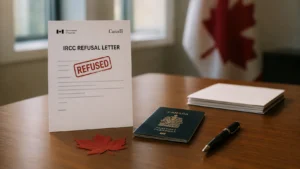
Immigration, Refugees and Citizenship Canada (IRCC) will send you a refusal letter that outlines the main reasons your application was denied. Common reasons include:
-
- Insufficient proof of funds to cover tuition, living expenses, and travel.
- Weak ties to your home country, raising concerns you may not return after studies.
- Unclear study plan or a program choice that does not align with your background.
- Incomplete documentation or missing required forms.
- Concerns about travel history or previous visa refusals from Canada or other countries.
- Doubts about your genuine intention to study in Canada.
Step 2: Order Your GCMS Notes
The refusal letter provides general reasons, but GCMS notes (Global Case Management System notes) give you detailed insight into the visa officer’s thought process.
With GCMS notes, you can find out:
-
- Specific doubts the officer had about your financial documents.
- Comments about your study plan or academic history.
- Any inconsistencies spotted between your forms and supporting evidence.
Ordering GCMS notes before reapplying ensures you address exactly what went wrong.
Step 3: Strengthen Your Proof of Funds
Financial stability is one of the biggest factors in study permit approvals. To meet IRCC’s requirements, you must show that you can cover:
-
- First year’s tuition fees in full.
- Living expenses (at least CAD $22,895 for a single applicant in most provinces).
- Return transportation costs.
Tips to strengthen proof of funds:
-
- Provide bank statements for at least 4–6 months showing stable balances.
- Include proof of income if funds come from parents or sponsors (employment letters, tax returns).
- Avoid last-minute large deposits without an explanation.
Step 4: Build a Stronger Study Plan
Your study plan should connect your past education and work experience to your chosen program in Canada. It must clearly explain:
-
- Why you chose Canada over other countries
- How the program aligns with your career goals.
- How the program is relevant to your background.
- Why you plan to return home after graduation
Avoid generic statements. A well-structured, personalized study plan can make the difference between approval and refusal.
Step 5: Prove Strong Home Country Ties
One of IRCC’s main concerns is whether you will leave Canada after your studies. To address this:
-
- Show family ties in your home country.
- Provide property ownership documents or lease agreements.
- Include evidence of employment prospects in your home country after graduation.
- Mention business ownership or ongoing commitments you must return to.
The stronger your ties, the lower the perceived risk of overstaying.
Step 6: Address Previous Travel History Concerns
If your refusal mentioned weak or problematic travel history:
-
- Highlight past compliance with visas from other countries.
- Provide evidence of previous international travel where you returned on time.
- If you have no prior travel, focus on strong ties and clear study goals to offset this.
Step 7: Work with a Licensed Immigration Consultant
An experienced immigration professional can:
-
- Review your refusal reasons and GCMS notes.
- Help you prepare clear and accurate documentation.
- Draft a stronger, targeted Letter of Explanation (LoE).
- Ensure your application complies fully with IRCC’s requirements.
Step 8: Submit a Complete and Organized Application
A well-prepared application should include:
-
- All IRCC-required forms, fully completed.
- Accurate and verifiable supporting documents.
- A clear Letter of Explanation addressing refusal concerns.
- Updated financial and academic documentation.
Remember, IRCC officers review many applications daily. The more organized and convincing your file is, the higher your chances of approval.
Final Thoughts
A study permit refusal is not the end of the road. Many applicants get approved on their second attempt by learning from their mistakes and addressing IRCC’s concerns directly.
If your application was refused, take time to:
- Understand the exact reason for refusal.
- Gather stronger evidence for your reapplication.
- Seek professional guidance to avoid repeating mistakes.
At Can X Global, we help students turn refusals into approvals by building stronger, well-documented applications that meet IRCC’s standards.
Contact us today to discuss your refusal case and start your journey toward studying in Canada with confidence.