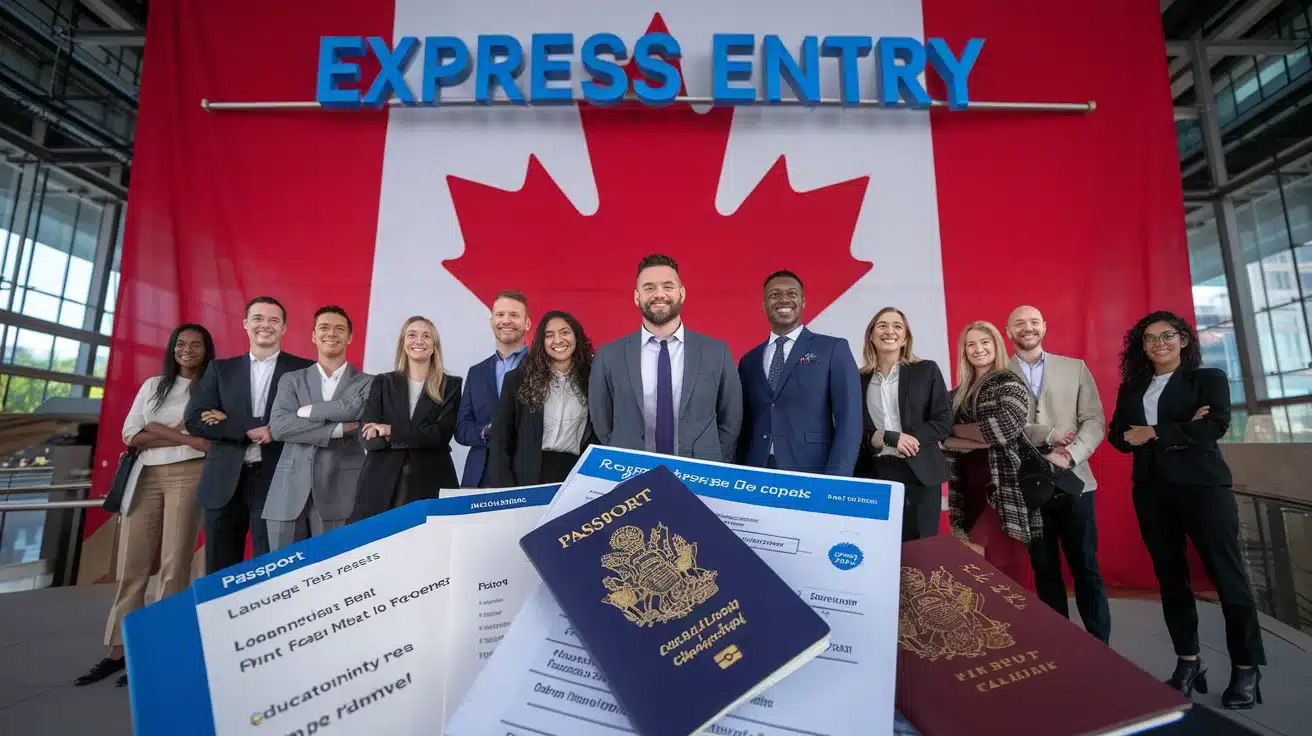
Skilled work experience is one of the most critical factors in Canada’s Express Entry system. It directly affects your eligibility for programs like the Federal Skilled Worker (FSW), Canadian Experience Class (CEC), and Federal Skilled Trades Class (FSTC), as well as your Comprehensive Ranking System (CRS) points.
Understanding what counts, how it’s assessed, and how to document it properly can make the difference between receiving an Invitation to Apply (ITA) or being refused.
At Can X Global, our RCIC-regulated consultants with over 10 years of experience guide applicants to ensure their work experience is accurately represented, fully compliant with Canadian immigration law, and maximized for points.
What is Skilled Work Experience?
In Express Entry, skilled work experience is defined as:
Paid work where you performed a job that Canada officially recognizes as skilled under immigration law.
Not all jobs qualify—even if you worked in them for years or received good pay. The actual job duties matter more than your title.
How Canada Determines if Work is Skilled
Canada uses the National Occupational Classification (NOC) system, which classifies jobs based on:
- The duties and responsibilities of the role
- The level of training, education, and experience required
Each job falls under a TEER level (Training, Education, Experience, and Responsibilities). For Express Entry, only work in TEER 0–3 counts:
|
TEER Level
|
Description
|
|
TEER 0
|
Management jobs
|
|
TEER 1
|
Jobs requiring a university degree
|
|
TEER 2
|
Jobs requiring a college diploma or apprenticeship
|
|
TEER 3
|
Jobs requiring a secondary diploma plus occupational training
|
TEER 4 and TEER 5 are considered low-skill and do not qualify, regardless of experience length.
Job Duties Matter More Than Job Titles
Under IRPR s.80(1) and confirmed by Federal Court decisions, the IRCC evaluates the actual duties performed, not just your job title.
- Your work must match the lead statement of the NOC code
- At least 80% of the main duties must align
- Even if promoted, paid well, or employer-certified, mismatch with NOC duties means the experience is ineligible
Legal Requirements for Work Experience
To be counted under Express Entry, work must meet the following conditions:
- Paid employment only – Unpaid work or volunteering does not count.
- Minimum duration – At least 1 year (1,560 hours). Canada counts a maximum of 30 hours per week.
- Recency:
- FSW → last 10 years
- CEC → last 3 years
- FSTC → last 3 years
Counting 1,560 Hours
- One full-time job: 30 hrs/week × 12 months = 1,560 hours
- Two part-time jobs: 20 + 10 hrs/week × 12 months = 1,560 hours
- Multiple part-time jobs: Totaling 30 hrs/week × 12 months = 1,560 hours
Hours above 30 per week do not count. Breaks must be made up to reach 1,560 hours.
Special Rules for International Students
- Work while studying full-time counts only for FSW, not CEC or FSTC.
- Full-time study means ≥15 hours/week, including mandatory co-op, practicum, or workplace training.
- Work overlapping with full-time study is excluded for Canadian work experience under CEC.
Canadian Work Experience: Legal Requirements
For work to count as legal Canadian work experience, all three conditions must be met:
- Authorization to work – Valid work permit or specific exemption.
- IRPA s.30(1): Foreign nationals may not work in Canada without authorization.
- Valid legal status – Must maintain temporary resident status (worker, student, or visitor) at all times.
- IRPA s.20(1)(b), IRPR s.183(5)
- No unauthorized work – Work after your permit or status expires is illegal and cannot be counted.
Example:
- Counts: Work under a valid PGWP, stopping when it expires or extending status under maintained status.
- Does NOT count: Work after permit expiry, without authorization, or while only on visitor status.
Unauthorized work or overstaying may also trigger misrepresentation consequences under IRPA s.40(1)(a).
How Work During Studies is Treated
- Work done during full-time studies is excluded from CEC or FSTC, even if legally permitted.
- It may count for FSW if all other requirements are met.
IRCC evaluates:
- Enrollment status (full-time vs. part-time)
- Academic calendar dates
- Overlaps with work periods
If work overlaps with full-time study, CRS points for Canadian work are reduced.
Documentation Requirements
To prove your work experience, IRCC requires:
- Reference letters:
- Company letterhead
- Employer contact info
- Supervisor name, title, and signature
- Employment dates, position, main duties, hours/week, salary, benefits
- Confirmation of current employment if applicable
- Self-employment proof:
- Business ownership documents
- Client contracts
- Payment proof
Self-written descriptions or affidavits alone are not accepted.
Current employment letters should be recently dated, ideally within 30 days of application.
Best Practices
- Include only work that matches NOC duties and earns points
- Do not include irrelevant, low-skill, or volunteer jobs
- Keep documents organized to avoid delays, refusals, or CRS reductions
- For international students, list only jobs that strengthen your eligibility
- Ensure Canadian work experience is legal and authorized
How Can X Global Helps
As RCIC-regulated consultants, Can X Global assists applicants by:
- Assessing which jobs qualify as skilled work
- Matching your roles to the correct NOC code
- Ensuring employment letters meet IRCC requirements
- Advising on part-time, self-employed, and Canadian work experience
- Avoiding errors that can reduce CRS points or trigger refusals
With over 10 years of experience, we help applicants confidently claim their work experience, maximize points, and increase their chance of receiving an ITA.
Key Takeaways
- Only paid, skilled work in TEER 0–3 counts
- Job duties matter more than title
- Canadian work must be legal and authorized
- Work during full-time studies has special rules
- Proper documentation is critical
- Accurate work experience presentation can maximize CRS points and improve PR chances
Skilled work experience is the backbone of your Express Entry profile. Careful assessment, proper documentation, and strategic presentation are essential to succeed.
How Can X Global Helps
Navigating Canadian skilled work experience requirements is complex, but it doesn’t have to be confusing. At Can X Global, our RCIC-regulated consultants with 10+ years of experience provide:
- Expert NOC and TEER classification
- Legal compliance review for Canadian and foreign work experience
- Document preparation and verification
- Personalized guidance to maximize CRS points
Your work experience is valuable — make sure it counts. With Can X Global, you can be confident that every hour, every job, and every document is handled professionally, accurately, and strategically.