




Dual Citizenship in Canada Explained: 12 Things People Usually Discover Too Late

One of the most common questions people ask after becoming a permanent resident is:
“If I become Canadian, do I lose my original citizenship?”
It sounds like a simple question.
But it creates a lot of confusion.
People hear different things from friends, family members, WhatsApp groups, social media, and online forums. One person says Canada allows dual citizenship. Another says you automatically lose your original nationality. Someone else says it depends on where you were born.
Eventually people end up more confused than when they started.
At Can X Global Solutions, we often speak with individuals who delayed applying for Canadian citizenship because they believed becoming Canadian meant giving something up.
The reality is more nuanced.
If you are planning to apply for Canadian citizenship or are simply exploring your options, here are some things worth understanding before making assumptions.
1. Canada Generally Allows Dual Citizenship
Let’s start with the good news.
Canada generally allows individuals to hold Canadian citizenship while keeping citizenship from another country.
This means becoming Canadian does not automatically mean surrendering your original nationality.
However, many people stop reading after hearing that.
That creates problems.
Because Canada only controls Canadian rules.
Your home country controls its own.
2. Your Home Country May See Things Differently
This is where many people get surprised.
Some countries fully allow dual citizenship.
Some allow it only under certain situations.
Some require paperwork.
Others restrict it completely.
Many people focus entirely on Canadian rules and never check what happens on the other side.
That mistake usually gets discovered late.
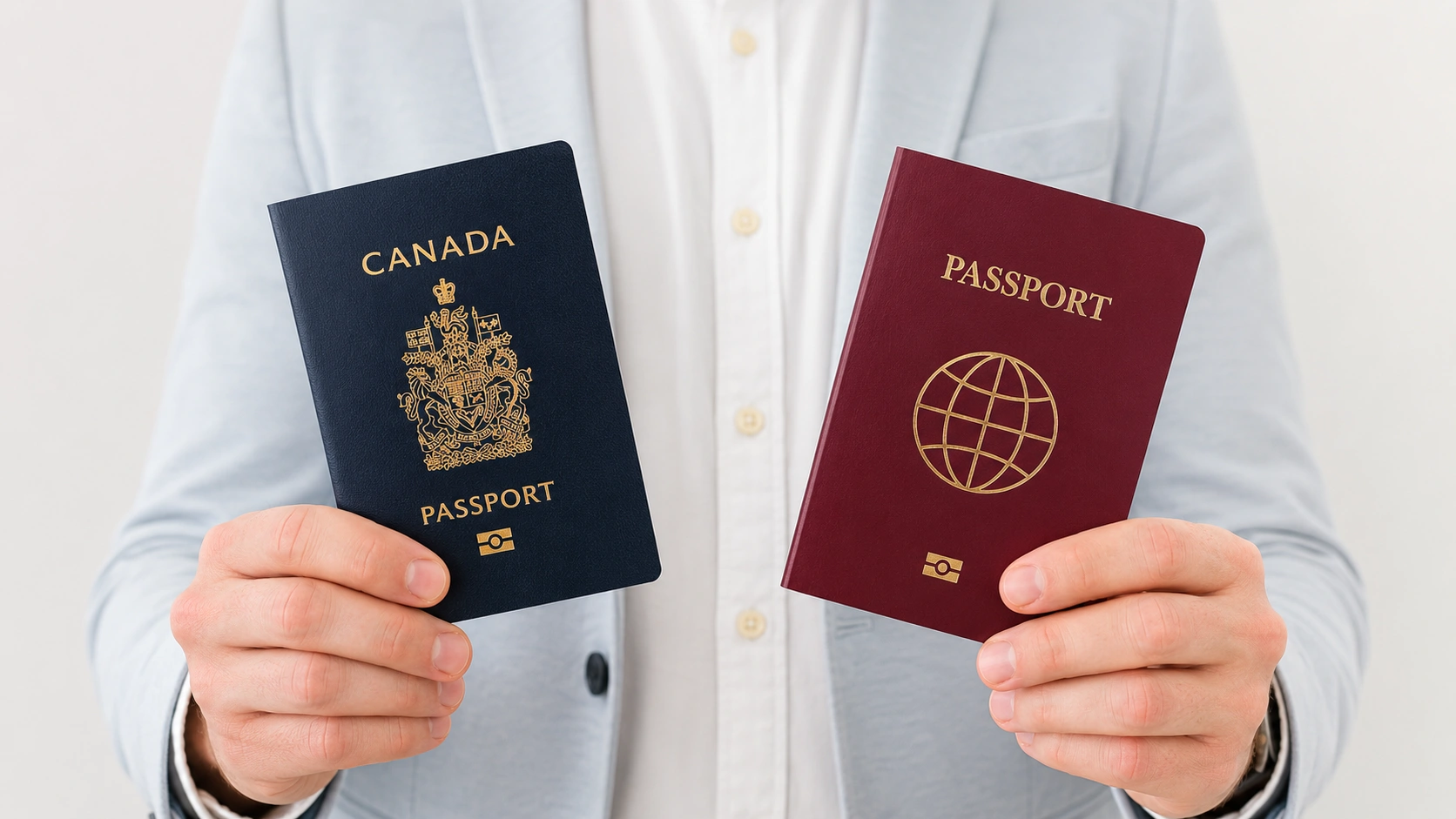
3. Having Two Passports Does Not Always Mean You Have Dual Citizenship
People often assume:
“I have two passports, so I obviously have dual citizenship.”
Not necessarily.
Passports and legal citizenship status do not always tell the same story.
Some people hold travel documents or overseas nationality status that creates confusion.
It is important to understand exactly what legal status you hold rather than assuming.
4. Dual Citizenship Is Not Just About Travel
When people think about citizenship, they usually think about passports.
But citizenship can affect much more.
Depending on the country involved, questions can arise regarding:
- property ownership
- inheritance rights
- taxation rules
- government obligations
- voting rights
Many people discover these details only years later.
Have questions about your work permit options?
Book a Consultation5. Some Countries Want You to Use Their Passport
This catches many travelers off guard.
Some countries require their own citizens to enter and leave using that country’s passport.
People often discover this while standing at an airport counter.
If you eventually hold more than one citizenship, understanding travel rules becomes important.
6. Your Children May Benefit Too
Parents often focus entirely on themselves and overlook something important.
Children can sometimes receive citizenship rights through:
- parents
- place of birth
- ancestry
- timing of birth
Many families later discover their children already had rights they never knew existed.
7. Becoming Canadian Does Not Solve Every International Issue
Some people believe Canadian citizenship automatically protects them everywhere.
Life is not always that simple.
If another country also recognizes you as its citizen, legal situations can become more complicated.
Understanding how countries view dual nationality matters more than many people realize.
8. Marriage Does Not Automatically Create Citizenship
This misunderstanding appears constantly.
People still believe marrying a Canadian immediately creates citizenship rights.
Marriage can create immigration pathways.
Marriage itself does not create automatic citizenship.
There are still processes, applications, and legal requirements involved.
Need help preparing a strong application?
Get a Personalized Assessment9. Citizenship Can Affect Future Generations
Many people applying today focus only on their own situation.
But citizenship can extend beyond one person.
Questions eventually come up:
Will children qualify?
Can citizenship pass down?
Will future rules affect my family?
Thinking long-term matters.
10. Small Details Matter More Than People Think
Many citizenship issues involve details people overlook:
- previous immigration history
- travel patterns
- family history
- country of birth
- documentation differences
Two people with similar backgrounds can end up with completely different outcomes.
11. Internet Advice Is Often Wrong
Immigration myths spread fast.
Especially online.
You have probably heard things like:
“You automatically lose your old citizenship.”
“Marriage gives you citizenship.”
“Children automatically inherit everything.”
Citizenship rules are highly fact-specific.
What worked for one person may not apply to another.
12. Most People Ask Questions Too Late
This may be the biggest lesson of all.
Many people start asking questions after:
- submitting applications
- booking travel
- discovering document problems
- receiving unexpected news
Earlier planning usually creates smoother outcomes.
Want to speak with a licensed RCIC?
Speak With an ExpertFinal Thoughts
Canadian citizenship is often viewed as the final chapter of an immigration journey.
For many people, it becomes the beginning of new questions involving family, travel, children, and future planning.
Understanding those questions early can prevent confusion later.
How Can X Global Solutions Can Help
Citizenship matters can appear straightforward on the surface. However, situations involving family history, multiple nationalities, and long-term planning often become more complex than expected.
At Can X Global Solutions, our team helps individuals understand Canadian immigration and citizenship pathways, identify concerns early, and make informed decisions before starting the process.
Need Help Understanding Your Citizenship Options?
If you are considering Canadian citizenship and want clarity before taking the next step, obtaining guidance early can save time and avoid unnecessary surprises.
Connect with Can X Global Solutions and explore your options with confidence.
Dual Citizenship Canada Explained: 12 Things People Learn Too Late
Thinking about becoming a Canadian citizen? Learn 12 important facts about dual citizenship in Canada and avoid common misunderstandings before applying.
How Can X Global Can Help
At Can X Global Solutions, our licensed RCIC team helps individuals and families navigate Canadian citizenship, proof of citizenship, and citizenship by descent applications with confidence. Book a consultation today.
Ready to start your Canadian citizenship journey?
Book a ConsultationRelated Articles
- Americans With Canadian Family Roots Are Discovering a New Challenge: Finding Proof of Canadian Citizenship Through Ancestry
- Canada Quietly Changed Proof of Citizenship Rules for Applicants Abroad: Here’s Why It Matters
- Applying for Proof of Canadian Citizenship? 10 Practical Tips From an RCIC
- One-Year Wait for Proof of Canadian Citizenship? Here’s Why Applications Are Suddenly Surging
Get Expert Immigration Advice
10+ years helping clients achieve Canadian permanent residency.
Book a ConsultationTrusted by Clients from 30+ Countries
We provide trusted and effective Immigration solutions, assisting clients from around the world in successfully starting their new life in Canada.
Most Read
View all →
What Happens After You Apply for Canadian Citizenship? Timeline and Next Steps

What Documents Do You Need to Apply for Canadian Citizenship

How to Calculate Physical Presence for Canadian Citizenship Application

Top 5 Reasons Your Canadian Citizenship Application Might Get Refused