







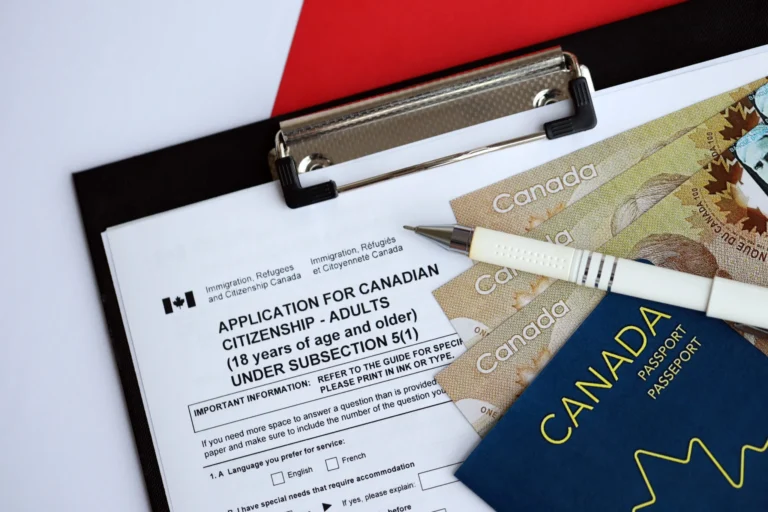





The Canadian citizenship test is the last major hurdle for many permanent residents on the road to becoming Canadian. It is short, but it matters: you need at least 15 correct answers out of 20 to pass, and a weak result can delay your citizenship by months. The good news is that the test is predictable. Every question comes from the topics in one official study guide, and IRCC gives you up to three chances to pass the online test.
This guide explains how the Canadian citizenship test works in 2026, who must take it, what to study, the rules for the online test and what happens if you do not pass.
Quick Summary
Applicants aged 18 to 54 on the date they sign their citizenship application must take the test. According to IRCC, the test has 20 multiple-choice or true-or-false questions, lasts 45 minutes and requires at least 15 correct answers to pass. It is available in English or French, and most people take it online. IRCC’s official study guide is Discover Canada: The Rights and Responsibilities of Citizenship. Applicants who do not pass after three attempts are generally scheduled for a hearing with a citizenship official.
Who Must Take the Citizenship Test?
You must take the test if you are between 18 and 54 years old on the day you sign your citizenship application. Applicants under 18 or 55 and older do not take the test. IRCC may offer accommodations, and in limited situations a waiver, for people with qualifying circumstances such as a disability.
How the Test Works in 2026
| Feature | Details |
|---|---|
| Number of questions | 20 (multiple choice or true or false) |
| Time allowed | 45 minutes |
| Pass mark | At least 15 correct answers |
| Languages | English or French |
| Main format | Online, self-administered |
| Attempts | Up to 3 for the online test |
| Study guide | Discover Canada: The Rights and Responsibilities of Citizenship |
The 45-minute time limit is longer than many older online guides suggest, so rely on IRCC’s current instructions rather than outdated articles. In March 2026, CIC News reported IRCC’s clarification that questions come from a large bank balanced by topic and difficulty, and that in-person or video tests are offered in specific situations, such as accommodations or technical problems.
What the Test Covers
Questions test your knowledge of Canada, not your language level. Topics include:
- Rights and responsibilities of citizenship.
- Canadian history, including Indigenous peoples.
- How Canada’s government works: federal, provincial and municipal.
- Elections, the justice system and laws.
- Canada’s geography and regions.
- The economy.
- National symbols.
Questions about your own province or territory, such as its capital and government, can also appear, so study the regional section for where you live. Surrey residents, for example, should know British Columbia’s details.
Ready to apply for Canadian citizenship?
Book a ConsultationHow to Prepare
Study the official guide first
Read Discover Canada from start to finish. IRCC offers it online, as a PDF, as an eBook, in audio and in print. The audio version is ideal for listening during commutes.
Use IRCC’s practice questions
IRCC links to practice questions from its study page. Use them to check your understanding, then return to the guide for any topic you miss.
Focus on details that are easy to mix up
- Dates and key events in Canadian history.
- The roles of the Governor General, Prime Minister and Premiers.
- The three branches of government and how laws are made.
- Provincial and territorial capitals.
Prepare your test space
Most people take the test online, at home. Use a reliable computer and internet connection, read IRCC’s invitation carefully and follow every rule about who can be in the room and what you can have nearby. Breaking test rules can invalidate your result.
What Happens After the Test
If you pass and meet all other requirements, IRCC invites you to a citizenship ceremony, where you take the Oath of Citizenship and officially become a Canadian citizen. If you do not pass the online test after your attempts, IRCC generally schedules a hearing with a citizenship official, who assesses your knowledge directly. Do not ignore any IRCC invitation, because missing a test or hearing without a good reason can lead to your application being closed.
Common Mistakes to Avoid
- Studying unofficial question banks only, instead of the official guide.
- Ignoring your province’s section.
- Taking the test without checking your computer and internet first.
- Missing IRCC emails or messages in your online account.
- Confusing the citizenship test with the language requirement; they are separate.
Citizenship Fees in 2026
| Application | Fee (CAD) |
|---|---|
| Adult (18 and older) | $653 (processing fee plus right of citizenship fee) |
| Minor (under 18) | $100 |
Fees change, so confirm them on IRCC’s fee list before you pay.
How Can X Global Solutions Helps
At Can X Global Solutions, we help permanent residents confirm their eligibility, calculate physical presence accurately and prepare complete citizenship applications. For 11+ years, our Surrey team has supported clients from more than 30 countries all the way from their first permit to their citizenship ceremony.
Explore our citizenship services, our team and immigration consultation services, or read IRCC’s official study guide page.
Frequently Asked Questions
How many questions are on the Canadian citizenship test in 2026?
According to IRCC, the test has 20 questions that are either multiple choice or true or false. You have 45 minutes to complete it, and you must answer at least 15 questions correctly to pass. The test is available in English or French, and most applicants take it online.
What happens if I fail the Canadian citizenship test?
IRCC gives applicants up to three attempts at the online test. If you do not pass after your attempts, IRCC generally schedules a hearing with a citizenship official, who assesses your knowledge directly. Keep studying the official guide and respond promptly to every IRCC invitation.
Who is exempt from the Canadian citizenship test?
Applicants who are under 18 or 55 and older on the date they sign their application do not take the test. In limited situations, IRCC may offer accommodations or consider a waiver for people with qualifying circumstances, such as certain disabilities. Supporting documents are usually required.
What should I study for the citizenship test?
Study IRCC’s official guide, Discover Canada: The Rights and Responsibilities of Citizenship. It covers rights and responsibilities, history, government, elections, justice, geography, the economy and symbols. Also review the section on your own province or territory and use IRCC’s practice questions to check your understanding.
How This Guide Helps You
The citizenship test feels stressful, but it becomes manageable with the right information. This guide gives readers the current 2026 format, what to study, how to prepare for the online test and what happens next. With it, permanent residents can approach the test calmly and take the final step toward becoming Canadian.
Disclaimer: This content is for informational purposes only and does not constitute legal immigration advice. Consult a licensed immigration consultant or lawyer for guidance specific to your situation.
Book a consultation with Can X Global Solutions. We have helped clients from 30+ countries make Canada home, and we can help you take the final step to citizenship.
Book a Consultation