















For years, Canadian families abroad faced a frustrating rule: a Canadian citizen born outside Canada generally could not pass citizenship to a child also born outside Canada. That “first-generation limit” changed on December 15, 2025, when Bill C-3, An Act to amend the Citizenship Act (2025), came into effect. Today, many children born abroad to Canadian parents are citizens automatically, while others qualify only if their Canadian parent meets a new “substantial connection” test.
This guide explains how Canadian citizenship works for a child born abroad in 2026, who is a citizen automatically, how the 1,095-day test works and how to get proof of citizenship.
Quick Summary
A child born outside Canada to a parent who was born in Canada or naturalized in Canada is generally a Canadian citizen by descent. Since December 15, 2025, a child born or adopted abroad on or after that date to a Canadian parent who was also born or adopted abroad is a citizen if that parent spent at least 1,095 days in Canada before the child’s birth or adoption. Many people affected by the old first-generation limit became citizens automatically. Children of permanent residents born abroad are not citizens. Proof of citizenship costs $75.
The Starting Point: Citizenship by Descent
Canadian citizenship by descent depends on the parent’s citizenship at the time of the child’s birth. A child born abroad is not a citizen simply because a parent is a permanent resident; the parent must be a Canadian citizen.
What Changed With Bill C-3
In December 2023, the Ontario Superior Court of Justice found the first-generation limit unconstitutional for many people. After interim measures in 2025, Parliament passed Bill C-3, which came into effect on December 15, 2025.
| Situation | General rule under the current law |
|---|---|
| Parent born or naturalized in Canada, child born abroad | Child is generally a citizen by descent |
| Parent born abroad, child born before December 15, 2025 | Many people previously excluded by the first-generation limit became citizens automatically; eligibility depends on family history |
| Parent born abroad, child born or adopted on or after December 15, 2025 | Child is a citizen if the parent had at least 1,095 days of cumulative physical presence in Canada before the birth or adoption |
| Parent is a permanent resident, not a citizen | Child is not a Canadian citizen |
The Substantial Connection Test
For children born or adopted abroad on or after December 15, 2025, to a Canadian parent who was also born or adopted abroad, the Canadian parent must show at least 1,095 days, or three years, of cumulative physical presence in Canada before the child’s birth or adoption. The days do not need to be consecutive. Families should keep records such as school transcripts, employment records, tax documents and travel history to prove the parent’s time in Canada.
Ready to apply for Canadian citizenship?
Book a ConsultationHow to Get Proof of Citizenship
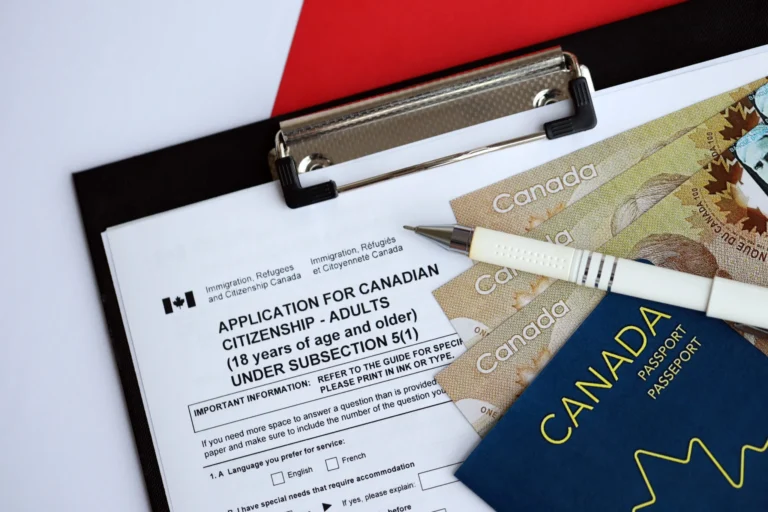
A child who is a citizen by descent does not need to apply for citizenship, but they do need proof. Apply to IRCC for a citizenship certificate, which costs $75. You generally need the certificate before you can apply for a Canadian passport for the child.
| Document | Why you need it |
|---|---|
| Child’s birth certificate showing parents | Proves the parent-child relationship |
| Parent’s proof of Canadian citizenship | Canadian birth certificate or citizenship certificate |
| Parent’s physical presence evidence, if applicable | Needed for the substantial connection test |
| Identity documents and photos | Required by IRCC |
Adopted Children
Children adopted abroad by Canadian citizens may be able to apply for a direct grant of citizenship rather than proof of citizenship. Bill C-3 also opened this route to more children adopted abroad by Canadian parents who were themselves born or adopted abroad. Adoption cases have additional requirements, so get advice before applying.
What If Your Child Is Not a Citizen?
If your child does not qualify for citizenship by descent, other options may exist, such as sponsoring the child as a dependent child for permanent residence or including them in a parent’s PR application. Once the child becomes a permanent resident, they may later apply for citizenship as a minor.
How Can X Global Solutions Helps
At Can X Global Solutions, we help families assess citizenship by descent, gather proof of a parent’s physical presence, apply for citizenship certificates and explore sponsorship when a child does not qualify. With 11+ years of experience and clients from more than 30 countries, we understand families who live across borders.
Explore our citizenship services, dependent child sponsorship and family sponsorship services, or read IRCC’s Bill C-3 announcement.
Frequently Asked Questions
Is my child born abroad automatically a Canadian citizen?
Often, yes, if you were a Canadian citizen when your child was born. If you were born or naturalized in Canada, your child born abroad is generally a citizen by descent. If you were also born abroad, the rules depend on the birth date and, for children born on or after December 15, 2025, your time in Canada.
What is the 1,095-day rule for children born abroad?
For children born or adopted abroad on or after December 15, 2025, to a Canadian parent who was also born or adopted abroad, the parent must have at least 1,095 days of cumulative physical presence in Canada before the child’s birth or adoption. The days do not need to be consecutive.
How do I get proof of citizenship for my child born abroad?
Apply to IRCC for a citizenship certificate, which currently costs $75. Include the child’s birth certificate, the parent’s proof of citizenship and, where required, evidence of the parent’s physical presence in Canada. You generally need the certificate before applying for a Canadian passport for your child.
Is a child born abroad to permanent residents a Canadian citizen?
No. Citizenship by descent requires a parent who is a Canadian citizen at the time of the child’s birth. Children born abroad to permanent residents may become permanent residents through sponsorship or a parent’s application, and they may apply for citizenship later once eligible.
How This Guide Helps You
Bill C-3 changed the rules for thousands of families, but many parents still rely on outdated information. This guide explains who is a citizen today, how the 1,095-day test works and how to get proof. With it, families can protect their children’s rights and plan their next steps with confidence.
Disclaimer: This content is for informational purposes only and does not constitute legal immigration advice. Consult a licensed immigration consultant or lawyer for guidance specific to your situation.
Book a consultation with Can X Global Solutions. We have helped clients from 30+ countries make Canada home, and we can help your family confirm your child’s citizenship.
Book a Consultation