Acanada visa refusal from Immigration, Refugees and Citizenship Canada (IRCC) can be disheartening, especially when you’ve invested time, money, and hope into your application. Whether it’s a visitor visa, study permit, or work permit, a refusal is not the end of your journey. With the right information, strategy, and supporting documents, you may reapply successfully or explore other remedies such as reconsideration, judicial review, or appeal (where available).
This guide explains every path you can take after a refusal in 2026, along with tips and insights to improve your chances the next time.
Who Is This Guide For?
This guide is helpful for:
-
- Temporary visa applicants (visitor, study, or work permit) who were recently refused
- Individuals unsure whether to reapply or challenge the decision
- Permanent residence (PR) applicants facing refusal in family sponsorship or humanitarian applications
- Immigration consultants or lawyers preparing a strategy for their clients
Step 1: Understand Why Your Canada Visa Refusal Occurred
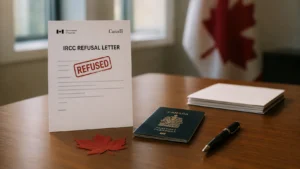
Every Canada Visa Refusal by IRCC includes a refusal letter. This letter lists the officer’s general reasons, such as:
-
- Missing or inaccurate documentation
- Insufficient proof of financial capacity
- Lack of clarity about your travel, study, or work purpose
- Weak home country ties (e.g. no stable job, family, property)
- Concerns about your intent to return after your stay
- Previous refusals or inconsistent immigration history
However, the refusal letter usually contains only standard, generic wording. To fully understand what the officer was actually thinking or concerned about, you must access the full decision record.
Step 2: Order GCMS or CAIPS Notes (Critical)
What Are GCMS Notes?
GCMS (Global Case Management System) notes are the internal records created by the visa officer who assessed your file. These notes:
-
- Contain the officer’s detailed rationale
- Highlight doubts or concerns not fully explained in the refusal letter
- Help you understand what exactly went wrong and how to fix it
Why You Still Need Them in 2026
While IRCC has started piloting the release of officer decision notes along with refusal letters for certain application types, this is not standard across all cases yet. In most cases, the only way to access the full reasoning is through an Access to Information and Privacy (ATIP) request, which allows you to get your GCMS or CAIPS notes.
Without these notes, you may miss critical issues and risk another refusal.
Step 3: Choose the Right Path Forward
There is no one-size-fits-all solution. Depending on your case type, Canada Visa Refusal reasons, and personal situation, you can choose one or more of the following options:
Option 1: Reapply with a Stronger Application (Most Common for Temporary Visas)
This is the most effective and practical response Canada Visa Refusal if:
-
- You understand and can fix the refusal reasons
- Your case does not involve complex legal or procedural errors
Steps to Take:
-
- Analyze your GCMS notes and refusal letter
- Gather new and improved documents (e.g. updated proof of funds, letters of employment, property ownership)
- Write a stronger statement of purpose or explanation letter
- Include a cover letter directly responding to each point of refusal
- Ensure all forms are current and complete
- Submit the reapplication and monitor the status online
Important: Do not simply resubmit the same documents and explanations. The outcome will likely be the same unless your new application is significantly stronger.
Option 2: Submit a Reconsideration Request
A Reconsideration Request is an informal way to ask IRCC to re-examine a refusal if:
-
- You believe a mistake was made (e.g., documents submitted were not considered)
- The refusal was due to a misunderstanding
Key Points:
-
- There is no official form or fee
- It must be sent to the visa office or IRCC portal where your original application was processed
- You must clearly explain the error and provide evidence
- There is no guarantee IRCC will respond or overturn the decision
This is not a substitute for reapplication or judicial review, but may be worth trying in clear-cut error cases.
Option 3: Apply for Judicial Review (Federal Court)
If your refusal involved serious legal, factual, or procedural errors, you may ask the Federal Court of Canada to review the officer’s decision.
Judicial Review is suitable when:
-
- The visa officer ignored key evidence
- The decision was unreasonable or procedurally unfair
- You were denied natural justice
Key Requirements:
-
- Only a licensed Canadian immigration lawyer can file a judicial review
- You must apply within 15 days (if refused inside Canada) or 60 days (if refused outside Canada)
- The court does not issue visas—it can order IRCC to reconsider the application
- Success depends on the legal strength of your case, not on your eligibility for the visa itself
This route is more time-consuming and costly but is appropriate when the decision was clearly flawed.
Option 4: Appeal (Available for Certain PR Refusals)
Not all refusals can be appealed. However, if your application falls into certain categories, appeal rights may be available.
Examples:
-
- Family class sponsorship refusals (spouse, common-law partner, parents or grandparents)
- PR cards revocation or removal orders in certain cases
How the Appeal Works:
-
- You must file an appeal to the Immigration Appeal Division (IAD) within 30 days of receiving the refusal
- The appeal involves a hearing and legal submissions
- You may present new evidence or explain the situation in more detail
Always check your refusal letter to confirm whether appeal rights are available.
Step-by-Step Guide: Reapplying After a Canada Visa Refusal
-
- Request your GCMS/CAIPS notes via ATIP
- Read and analyze the notes to understand the specific refusal concerns
- Gather stronger documents: updated bank statements, employer letters, family documents, travel history, etc.
- Prepare a detailed explanation letter (study/work/travel purpose or personal situation)
- Address each refusal point clearly and directly in a cover letter
- Ensure all forms and details are correct and complete
- Submit your new application and pay the required fees
- Monitor your application status regularly and prepare for next steps if needed
Tips to Improve Your Approval Chances After a Canada Visa Refusal
-
- Avoid incomplete or outdated forms
- Provide clear proof of funds and income sources
- Show strong home country ties (job, education, property, family responsibilities)
- Be honest about previous refusals—explain how the new application resolves those concerns
- Do not reuse identical documents or explanations
- Consult with a licensed immigration consultant or lawyer to review your file before resubmitting
Frequently Asked Questions (FAQ)
Can I appeal a visitor Canada Visa Refusal?
No. There is no formal appeal for visitor visas. You can either reapply or, if there’s a legal error, pursue judicial review.
How soon can I reapply after refusal?
There is no mandatory wait time. However, reapply only after fixing all identified issues. Submitting too quickly without making improvements will likely result in another refusal.
What is judicial review, and when should I consider it?
Judicial review is a Federal Court process where a judge reviews if the immigration officer’s decision was legally fair and reasonable. It’s used when there’s a serious legal or procedural flaw in the refusal.
How much does it cost to challenge a refusal?
-
- Reapplication fees: CAD $100–$255 depending on the visa type
- Judicial review: Starts at CAD $100–$200 (court fees), but total costs can range from CAD $2,000–$5,000+ with legal representation
Conclusion: A Canada Visa Refusal Is Not the End—It’s a Turning Point
Facing a visa refusal can feel like a major setback, but with the right steps, you can turn things around. Whether you:
-
- Reapply with stronger evidence
- Request reconsideration
- File for judicial review
- Appeal (in eligible cases)
—your next step should be carefully planned.
At Can X Global, our team of regulated immigration consultants and legal partners can:
-
- Analyze your GCMS notes
- Identify what went wrong and how to fix it
- Prepare complete and persuasive reapplications
- File reconsideration requests or judicial reviews, if warranted
Book a consultation today and let us help you move forward confidently on your Canadian immigration journey.