Immigration Consultants vs AI: Will Technology Replace Human Immigration Advice?

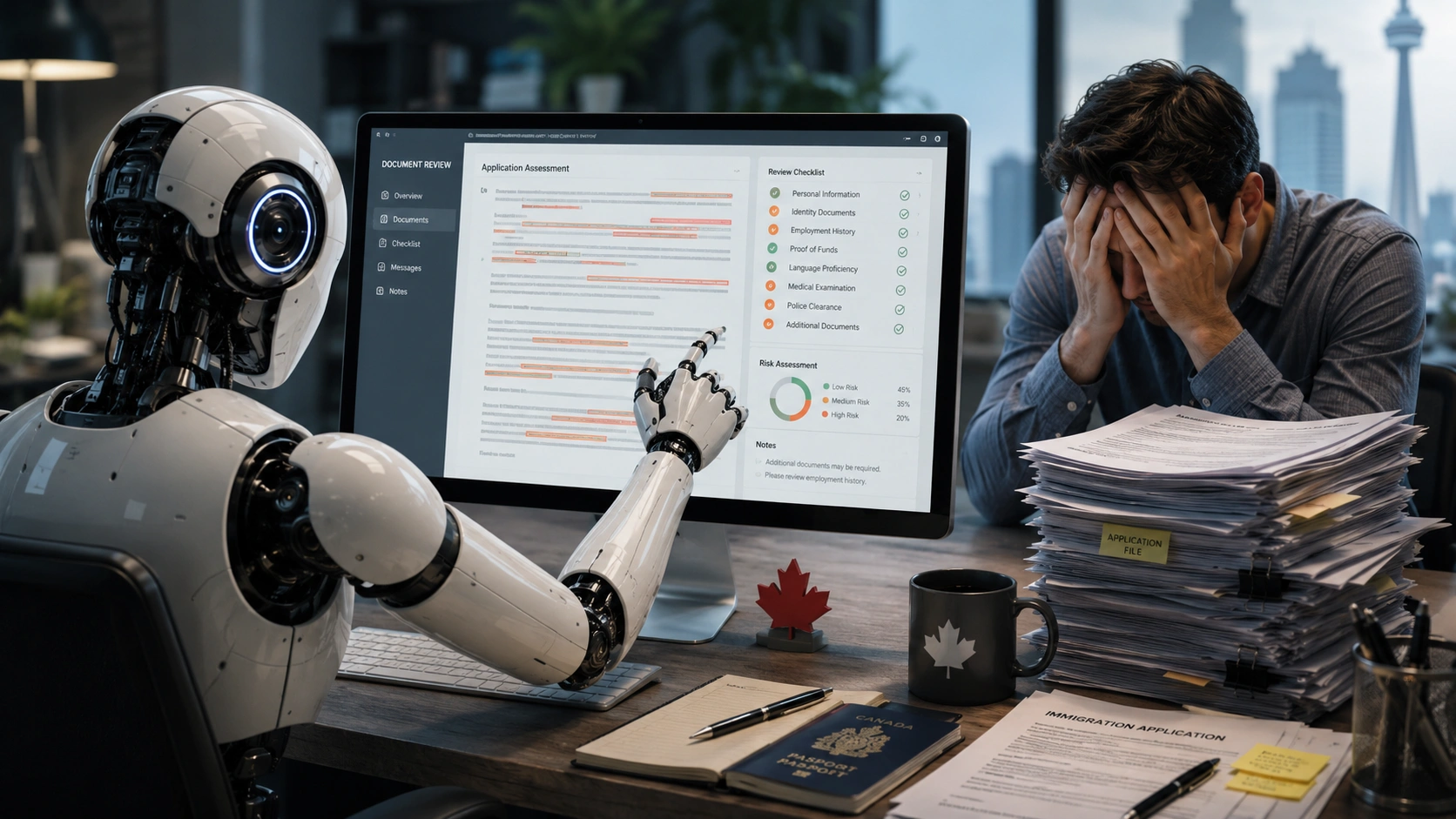
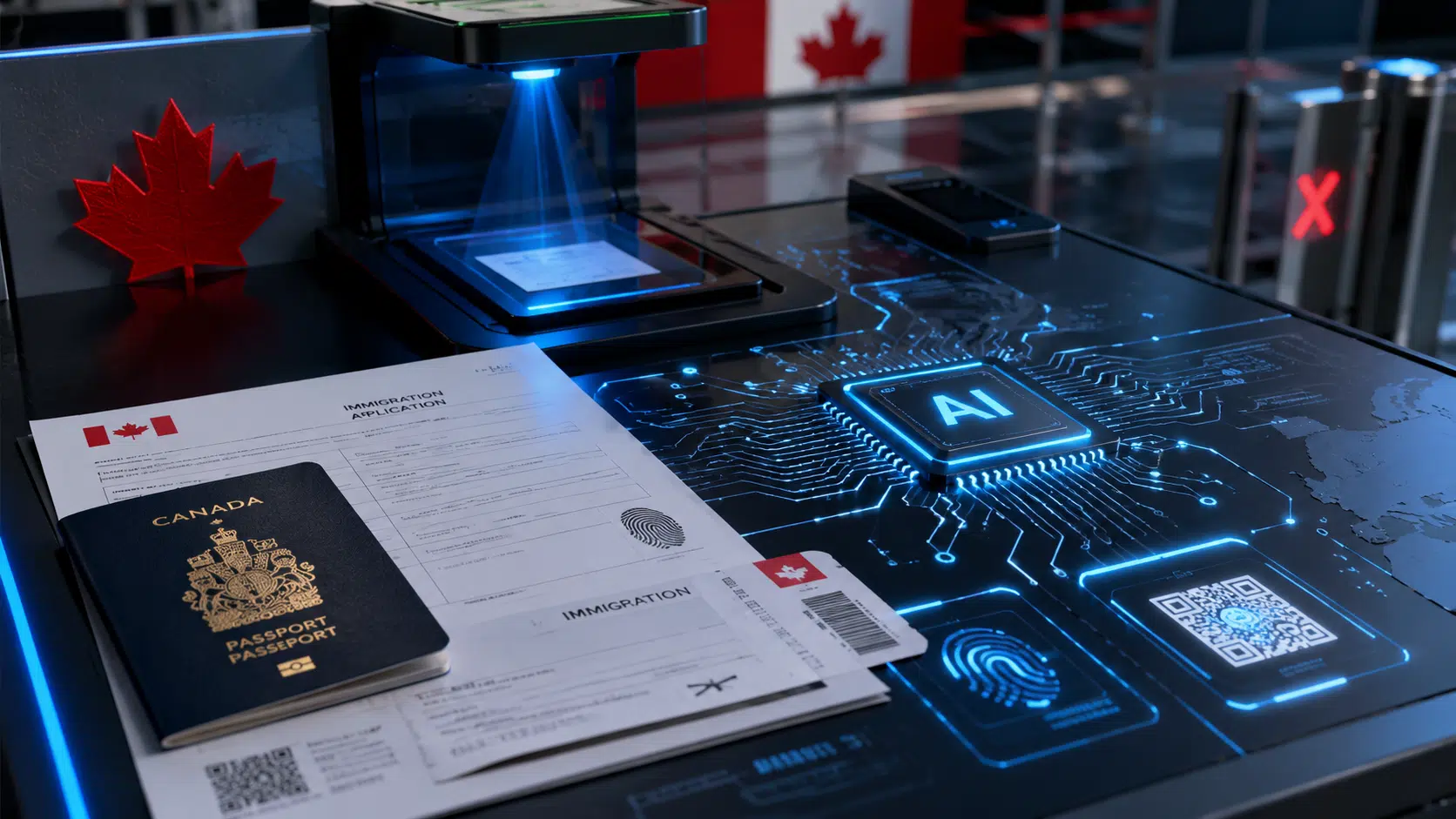
Artificial intelligence is changing almost every professional industry, and Canadian immigration is no exception. Applicants now use AI tools to draft Statements of Purpose, prepare visitor visa explanations, summarize refusal letters, create job duties, write support letters, compare immigration programs, and even build full application narratives. At the same time, IRCC is also using automation and advanced analytics to support application processing, reduce wait times, and help officers manage high application volumes. IRCC publicly states that automated systems do not refuse applications or recommend refusals, and that final refusal decisions are made by officers, but it also confirms that technology is already part of modern immigration processing. (Canada)
This naturally raises a major question for applicants and professionals: will AI replace immigration consultants? The honest answer is that AI will replace some tasks, but it will not replace real immigration judgment. It may replace generic form-filling, basic drafting, simple checklists, and low-level information gathering. It may also expose consultants who provide no real analysis and only recycle templates. However, AI cannot fully replace the role of a skilled immigration consultant because immigration advice is not simply about writing documents. It involves legal interpretation, risk assessment, credibility analysis, strategy, procedural fairness, representative accountability, and human judgment.
The future is not likely to be “AI versus consultants.” The future is more likely to be “consultants who use AI intelligently versus consultants who do not.” The professionals who understand both immigration law and technology will become more valuable, not less. The professionals who rely only on templates, outdated knowledge, or generic drafting will face pressure because AI can already perform many of those basic tasks faster and cheaper.
AI Is Excellent at Drafting, But Immigration Is Not Just Drafting
AI can produce polished writing within seconds. It can create a study plan, visitor visa explanation, employment letter, relationship support letter, or reconsideration request in a professional tone. For applicants who struggle with English or do not know how to organize thoughts, this can feel extremely helpful. AI can improve grammar, simplify language, structure information, and generate a first draft quickly.
However, immigration applications are not approved because the writing sounds polished. They are approved when the evidence satisfies legal requirements and addresses officer concerns. A beautiful letter can still be useless if it does not answer the real issue. A confident explanation can still be dangerous if it contains inaccurate facts. A professional-looking employment letter can still lead to refusal if the duties do not match the applicant’s actual work or the applicable NOC.
This is where AI reaches its limit. AI can write what sounds good, but it does not automatically know what is legally necessary. It may not know the applicant’s full immigration history, previous refusals, status issues, employment inconsistencies, program-specific requirements, officer concerns, or hidden risks. Immigration consultants are valuable when they understand what the officer is likely to question before the application is submitted.
Immigration Advice Is Regulated for a Reason
Canadian immigration advice is not ordinary customer service. It is a regulated professional activity because wrong advice can seriously affect someone’s future. IRCC explains that immigration and citizenship representatives may explain immigration options, help applicants choose programs, complete and submit applications, communicate with the government, and represent applicants in immigration matters. Paid representatives must be authorized. (Canada)
The College of Immigration and Citizenship Consultants also maintains a public register where applicants can verify whether an immigration consultant is licensed and active. (college-ic.ca) This regulatory framework exists because immigration advice carries consequences. A wrong answer can lead to refusal, loss of status, missed deadlines, misrepresentation findings, inadmissibility concerns, or years of immigration complications.
AI does not hold a licence. AI does not owe fiduciary duties. AI does not carry professional liability. AI does not review original evidence unless someone provides it. AI does not appear before regulators if something goes wrong. AI does not have a duty to protect the client’s legal interests. This does not mean AI has no value. It means AI should be understood as a tool, not a regulated professional.
AI Can Answer Questions, But It May Not Know the Right Question to Ask
One of the biggest differences between AI and an experienced immigration consultant is issue spotting. Applicants often ask the question they think matters, but the real risk may be somewhere else. For example, a study permit applicant may ask AI to write a stronger SOP, while the real problem is that the selected program does not make sense after previous education. A work permit applicant may ask for job duties, while the real issue is licensing. A visitor visa applicant may ask for a better invitation letter, while the real concern is weak home-country ties and unexplained funds. A permanent residence applicant may ask whether their CRS score is high enough, while the real problem is that the claimed work experience may not be properly proven.
AI usually responds to the prompt. A skilled consultant interrogates the facts. That difference is huge.
Good immigration advice often begins by asking uncomfortable questions. What was submitted before? Were any refusals omitted? Do the dates match previous applications? Is the NOC correct? Does the employer letter reflect actual duties? Does the applicant meet licensing requirements? Is there a status problem? Is there a misrepresentation risk? Is reapplication better than reconsideration? Is Judicial Review worth assessing? These are not always questions applicants know to ask AI.
Have questions about your work permit options?
Book a ConsultationAI Does Not Understand the Full Immigration File Unless It Is Given Everything
AI works only with the information provided to it. If an applicant gives incomplete facts, AI will produce incomplete advice. If the applicant forgets a previous refusal, does not mention an old application, leaves out a status issue, or fails to disclose family changes, AI cannot account for those risks. This creates a dangerous illusion because the answer may still sound complete.
Immigration applications are often refused because of information outside the document being drafted. A strong SOP may fail because the bank records are weak. A polished employment letter may fail because previous applications showed different employment dates. A spousal sponsorship narrative may fail because interview answers conflict with earlier forms. A visitor visa explanation may fail because family ties in Canada were not properly balanced with ties abroad.
A consultant’s role is to review the entire file, not simply one document. The real value is connecting facts across forms, evidence, prior history, legal requirements, and officer expectations. AI can assist with parts of that process, but it cannot replace full-file judgment unless the human user already knows what to provide and how to evaluate the answer.
AI May Increase Refusals When Used Without Judgment
AI can improve weak writing, but it can also make weak applications look stronger than they really are. This is one of the biggest risks. Applicants may believe that because the letter sounds professional, the application itself is strong. In reality, immigration refusals are rarely caused by poor grammar alone. They are usually caused by weak evidence, unclear purpose, inconsistent history, wrong program choice, unsupported job duties, financial concerns, or credibility issues.
AI may also create overstatements. It may describe duties the applicant never performed. It may say funds are stable when bank records show sudden deposits. It may claim strong home-country ties without evidence. It may create relationship language that sounds emotional but lacks real details. It may turn a simple explanation into a polished but inaccurate statement.
In immigration, exaggeration is not harmless. If inaccurate information is material, it can lead to serious consequences, including credibility findings or misrepresentation concerns. This is why AI must be supervised by someone who understands both the facts and the law.
The Consultant’s Value Is Strategy, Not Typing
The consultants most vulnerable to AI are those whose work is limited to typing forms, copying document checklists, or producing generic letters. AI can already do much of that. Applicants can generate basic drafts and checklists quickly. If a consultant’s only value is formatting documents, technology will eventually compete with that service.
However, strong immigration consultants do far more than type. They identify legal pathways, compare options, assess risks, prepare strategy, review evidence, detect inconsistencies, anticipate officer concerns, respond to procedural fairness letters, analyze refusals, and decide whether reapplication, reconsideration, or legal review makes sense. They also understand how to communicate difficult facts without creating more risk.
Immigration consulting is not document production. It is risk management. AI can support risk management, but it cannot fully replace professional judgment.
AI Will Make Good Consultants More Powerful
AI is not only a threat. It is also a powerful tool for good consultants. A skilled RCIC using AI responsibly can work faster, organize information better, summarize complex documents, compare evidence, identify inconsistencies, generate first drafts, and improve client communication. AI can help reduce repetitive work so the consultant can spend more time on strategy and quality control.
The key word is responsibly. AI output must be checked. Legal conclusions must be verified. Facts must match documents. Current rules must be confirmed from official sources. Drafts must be revised to reflect the client’s real situation. AI should support the consultant, not replace the consultant’s mind.
The future consultant will likely need both immigration knowledge and technology literacy. Applicants will expect faster service, clearer explanations, better organization, and more strategic insight. AI can help consultants deliver that, but only where the professional remains in control.
Need help preparing a strong application?
Get a Personalized AssessmentAI Cannot Replace Human Understanding in Complex Cases
Some immigration cases are straightforward. Others are deeply human and complex. Spousal sponsorship refusals, humanitarian and compassionate applications, misrepresentation allegations, medical inadmissibility, criminal inadmissibility, refugee-related matters, procedural fairness responses, and complex status problems require far more than generic information.
These cases require judgment, empathy, legal reasoning, and careful presentation of facts. They often involve human stories that cannot be reduced to a checklist. A relationship may have cultural context. A medical issue may require a mitigation plan. A criminal inadmissibility case may require rehabilitation strategy. A refusal may involve officer reasoning that must be carefully analyzed. A misrepresentation finding may require legal assessment before any future step is taken.
AI may help organize facts, but it cannot responsibly carry the weight of these decisions on its own. Human judgment matters most where consequences are serious.
AI Also Cannot Replace Professional Accountability
When applicants hire an authorized consultant, they are not only buying information. They are relying on a regulated professional who must meet standards of competence and professional conduct. If something goes wrong due to misconduct or incompetence, there are regulatory complaint mechanisms. Applicants can verify whether a consultant is authorized through the public register. (college-ic.ca)
AI offers no equivalent accountability. If AI gives outdated information, invents a rule, misinterprets a requirement, or drafts a misleading letter, there is no professional regulator to complain to. The applicant remains responsible for what is submitted.
This accountability gap is one reason AI should not be treated as a replacement for professional immigration advice, especially where the case involves refusals, inadmissibility, status expiry, family separation, employer compliance, or permanent residence eligibility.
The Future Is Hybrid: Human Expertise Assisted by AI
The future of immigration advice will likely be hybrid. AI will handle more research support, drafting assistance, document organization, translation support, summarization, risk flagging, and client intake. Human professionals will handle legal interpretation, strategic judgment, ethical responsibility, officer-risk analysis, and final review.
This hybrid model can improve access and efficiency. It can help applicants understand basic concepts and prepare better questions. It can help consultants deliver stronger and faster service. It can reduce repetitive work and improve consistency.
But the model only works if AI remains a tool. The moment applicants treat AI as the decision-maker or strategist, risk increases.
The best immigration future will not be AI replacing consultants. It will be technology elevating competent consultants and exposing weak ones.
Want to speak with a licensed RCIC?
Speak With an ExpertWhat Applicants Should Look for in the AI Era
Applicants choosing immigration help in the AI era should not simply ask whether a consultant uses technology. They should ask whether the consultant understands strategy. A good consultant should be able to explain risks, review previous immigration history, identify inconsistencies, discuss program options, assess evidence, and provide clear reasoning.
Applicants should also be careful of representatives who simply produce long AI-written letters without meaningful analysis. A longer letter is not always a stronger letter. A polished letter is not always a safer letter. In immigration, quality comes from relevance, accuracy, and evidence.
Applicants should use AI to become more informed, not to replace professional judgment where the stakes are high.
Final Thoughts
Will AI replace immigration consultants? It will replace some tasks. It will replace weak service models. It will reduce demand for generic drafting and basic information work. But it will not replace real immigration advice because immigration is not only about information. It is about judgment.
AI can write. AI can summarize. AI can organize. AI can draft. But it cannot fully understand a client’s risk, history, credibility issues, legal pathway, officer concerns, and long-term consequences the way a skilled human professional can.
The future belongs to immigration professionals who understand AI and applicants who understand its limits.
Technology will change immigration advice.
But it should not remove the human judgment at the heart of it.
How Can X Global Can Help
At Can X Global, we believe AI can be a valuable tool when used responsibly, but we do not believe immigration applications should be blindly generated by technology. Our team combines legal knowledge, immigration strategy, document review, risk assessment, and modern technology awareness to prepare stronger applications.
We review immigration history, prior refusals, officer concerns, supporting evidence, credibility risks, and program requirements before recommending a strategy. AI may assist the process, but professional judgment leads it.
Because in Canadian immigration, the right answer is not always the fastest answer.
It is the answer that protects the applicant’s future.
Want your application reviewed by a licensed RCIC?
Book a ConsultationRelated Articles
- How Artificial Intelligence Is Quietly Changing Canadian Immigration Decisions in 2026
- Does IRCC Use AI to Refuse Applications? Inside Chinook, Automation, and Modern Immigration Processing
- AI vs Human Officers: Who Really Decides Your Canadian Immigration Application?
- Can AI Detect Immigration Fraud Better Than Humans? The Future of Immigration Screening
Get Expert Immigration Advice
10+ years helping clients achieve Canadian permanent residency.
Book a ConsultationTrusted by Clients from 30+ Countries
We provide trusted and effective Immigration solutions, assisting clients from around the world in successfully starting their new life in Canada.