





PGWP Refused? Common Mistakes International Students Make

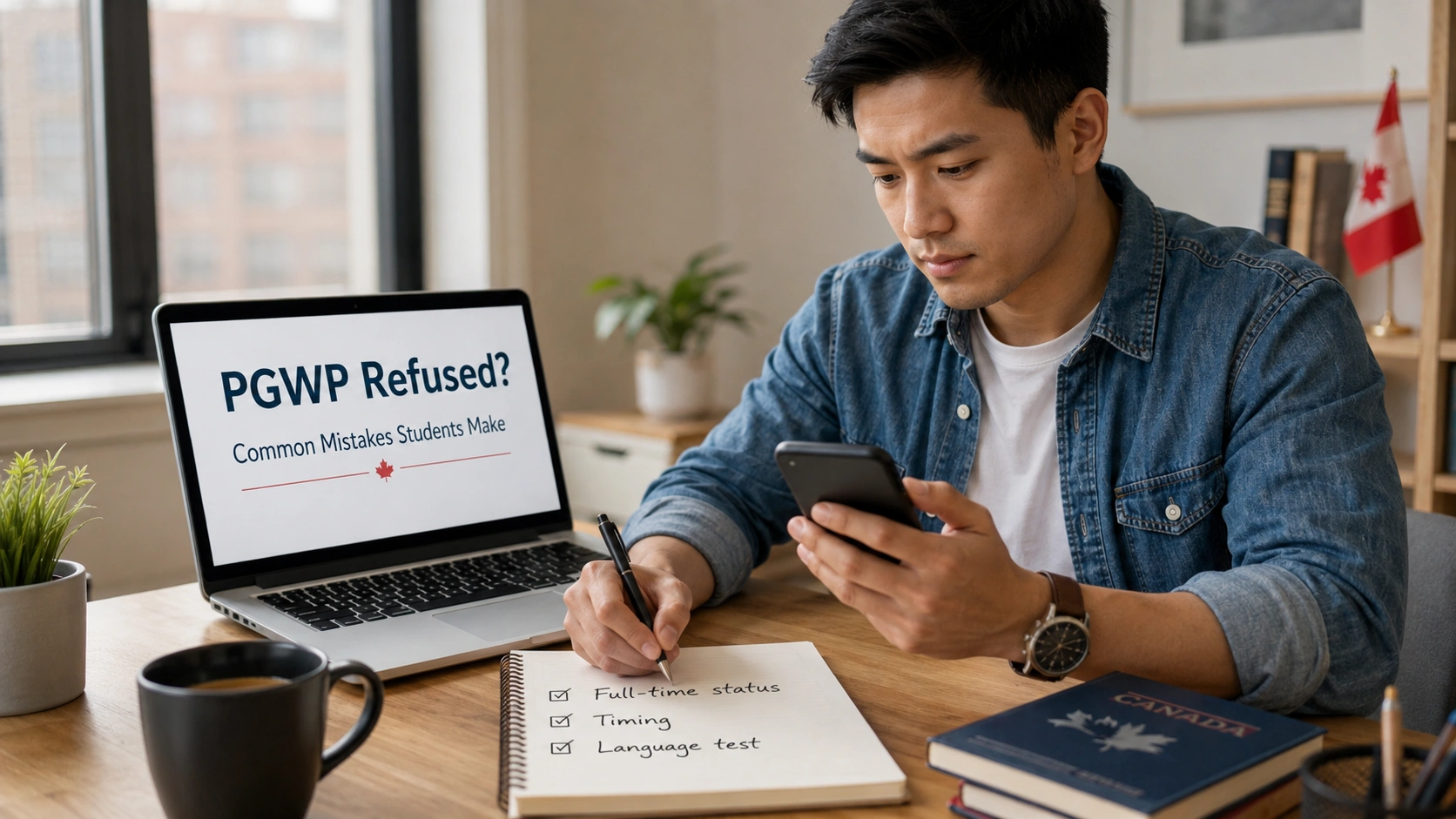
For many international students, graduating from a Canadian institution feels like reaching the finish line. Years of studying, tuition costs, assignments, exams, part-time jobs, and adapting to life in a new country finally lead to graduation day. Most students naturally believe that the next step will be simple: apply for a Post-Graduation Work Permit (PGWP), start working, gain Canadian experience, and eventually move toward permanent residence.
Unfortunately, the process does not always unfold that smoothly. Every year, international students receive PGWP refusals despite believing they did everything correctly. In many cases, the refusal feels unexpected because students assume graduating alone automatically guarantees eligibility.
The reality is that a PGWP is not issued simply because someone completed studies in Canada. Immigration officers assess eligibility requirements carefully and even small mistakes sometimes create significant consequences. Many refusals happen not because students completely fail requirements, but because they misunderstand rules, overlook timing issues, rely on outdated information, or miss important details during the application process.
The Biggest Misunderstanding: Graduation Alone Does Not Guarantee a PGWP
One of the most common assumptions international students make is believing that completing a program automatically creates PGWP eligibility.
Graduation is only one part of the assessment. Immigration officers also review whether the institution and program qualified, whether the student maintained eligibility throughout studies, whether application timelines were respected, and whether all immigration requirements were met. Students often focus heavily on finishing school while unintentionally overlooking immigration requirements connected to the PGWP process.
Not Every School Automatically Creates PGWP Eligibility
Many students discover too late that institution eligibility matters significantly.
Canada has many educational institutions, but not every school or program qualifies students for a Post-Graduation Work Permit. Some institutions are designated learning institutions, and only certain schools and programs support PGWP eligibility. Students occasionally choose programs based on convenience, tuition costs, or advice from friends and agents without confirming eligibility independently.
Program Eligibility Matters Just as Much as School Eligibility
Even where the institution itself qualifies, specific program details can still become important.
Students sometimes assume that because a school supports PGWP eligibility, every course or educational pathway within that institution automatically qualifies. Unfortunately, this is not always true. Certain delivery methods, structures, and educational arrangements can affect eligibility in ways many students do not realize.
Failing To Maintain Full-Time Status Is One of the Biggest Refusal Reasons
Many students are surprised to learn how important full-time enrollment becomes during studies.
Immigration authorities frequently assess whether students maintained full-time status during academic sessions unless specific exceptions applied. Students occasionally reduce course loads, switch to part-time studies, take unnecessary breaks, or misunderstand institutional rules without realizing immigration consequences may follow.
Have questions about your work permit options?
Book a ConsultationFinal Academic Terms Frequently Create Confusion
One area that repeatedly creates misunderstandings involves the final academic term.
Many students hear different information regarding whether full-time status remains necessary during the final semester. Others assume they can reduce course loads because graduation approaches. The rules can become very fact-specific, and students later discover they misunderstood how final-term exceptions actually worked.
Unapproved Breaks During Studies Can Create Problems
International students sometimes take breaks because of family circumstances, finances, health concerns, or personal situations.
However, not every break automatically complies with immigration requirements. Students frequently assume that approval from a school automatically resolves immigration concerns, but educational approval and immigration compliance are not always identical concepts.
Timing Mistakes Frequently Cause Avoidable Refusals
Many PGWP refusals happen because students misunderstand timelines.
Some individuals delay applications because they believe permit validity continues after studies end. Others wait for graduation ceremonies or personal milestones rather than understanding when immigration timelines officially begin.
Waiting Too Long After Completion Can Be Risky
After completing studies, students often become busy with family visits, travel, celebrations, and future planning.
Unfortunately, immigration timelines continue moving regardless of personal schedules. Students occasionally lose opportunities simply because they delayed acting while assuming they still had plenty of time.
Many Students Forget Language Test Requirements and Assume It Is Optional
One increasingly overlooked reason for PGWP refusals involves language test requirements. Many students complete years of Canadian education and assume studying in English automatically satisfies language expectations. Others believe their transcripts, assignments, or time spent studying in Canada replace formal language testing requirements.
The problem is that many students do not realize that evolving PGWP eligibility rules and changing immigration requirements may require valid language test results at the time of application. Because guidance can sometimes feel unclear and many students rely heavily on classmates, online groups, or overseas agents, applicants occasionally submit files without uploading valid language test results entirely.
Studying in Canada Does Not Always Replace Formal Language Documentation
Many students understandably think: I studied in Canada for years, so why would I need another language test? While the assumption sounds logical, immigration rules do not always operate according to practical assumptions.
Some applicants previously completed language testing but mistakenly upload expired scores or assume immigration officers already have access to earlier results through previous files. Immigration officers assess the application before them and missing or invalid language documentation can create refusal concerns even where students otherwise appear eligible.
Need help preparing a strong application?
Get a Personalized AssessmentWorking Too Much During Studies Can Create Problems
International students often work during studies because tuition costs and living expenses in Canada can be significant.
However, exceeding authorized work limits during studies occasionally creates immigration concerns. Some students misunderstand work authorization rules or assume small violations will not matter later. Immigration authorities may review compliance history carefully.
Unauthorized Work Continues To Be a Serious Concern
Students occasionally rely on advice from employers, friends, or online groups regarding work authorization.
Some assume cash employment does not matter while others misunderstand work eligibility before programs begin or after studies end. Employment history sometimes becomes relevant during immigration assessments, making compliance extremely important.
Applying Before Receiving Required Documents Can Create Problems
Some students become eager to submit applications immediately after finishing studies.
However, immigration authorities frequently expect documents such as completion letters, transcripts, and institutional confirmation supporting eligibility. Missing records sometimes create unnecessary complications that stronger planning could have prevented.
Students Sometimes Confuse Graduation Ceremonies With Completion Dates
One of the most common timing mistakes involves graduation ceremonies.
Many students believe studies officially end on convocation day. Immigration authorities frequently assess completion differently based on when institutions officially confirm program requirements were satisfied.
Want to speak with a licensed RCIC?
Speak With an ExpertImmigration History Still Matters
PGWP applications focus heavily on educational history, but immigration history remains relevant too.
Previous refusals, status issues, inconsistent information, undeclared applications, and compliance concerns may still affect assessments. Immigration officers frequently compare current submissions against earlier records.
Relying Completely on Friends and Social Media Creates Risks
International students frequently seek advice from classmates, online communities, and social media discussions.
Although personal experiences sometimes help, immigration outcomes depend heavily on individual facts. What worked for one student may not necessarily apply to another because institutions, permit conditions, educational histories, and circumstances differ significantly.
Common Mistake: Assuming Refusal Means Everything Is Over
Receiving a PGWP refusal often creates panic because many students immediately believe permanent residence opportunities disappeared permanently.
While PGWP refusals can create serious challenges, not every refusal ends immigration possibilities. Some situations involve documentation issues, misunderstandings, or concerns that may potentially be corrected.
GCMS Notes Can Reveal More Than Refusal Letters
Many refusal letters contain broad wording that leaves students confused regarding what actually happened.
Officer notes sometimes provide significantly more detail regarding decision-making and concerns. Reviewing these records often helps identify misunderstandings and determine whether stronger strategies exist moving forward.
Final Thoughts
A Post-Graduation Work Permit refusal can feel devastating because many international students view it as one of the most important steps toward building a future in Canada. However, many refusals happen because of avoidable misunderstandings involving status, timing, studies, eligibility, or documentation rather than complete ineligibility.
How Can X Global Can Help
At Can X Global, we help students review refusal reasons, assess eligibility concerns, understand officer notes, and prepare stronger immigration strategies after refusals. In many situations, understanding what went wrong becomes the first step toward protecting future opportunities in Canada.
Ready to take the next step with Can X Global?
Book a ConsultationGet Expert Immigration Advice
10+ years helping clients achieve Canadian permanent residency.
Book a ConsultationTrusted by Clients from 30+ Countries
We provide trusted and effective Immigration solutions, assisting clients from around the world in successfully starting their new life in Canada.
Most Read
View all →
Can You Apply for PR While You Are Still on a Work Permit?

I Got Laid Off on a Work Permit. What Happens to My Status Now?

I Got a Canadian Job Offer From India. What Do I Do Next?
Open Work Permits vs Employer-Specific Work Permits: Which One Do You Have?