




The Hidden Risks of Using ChatGPT for Immigration Applications: Mistakes That Are Leading to Refusals

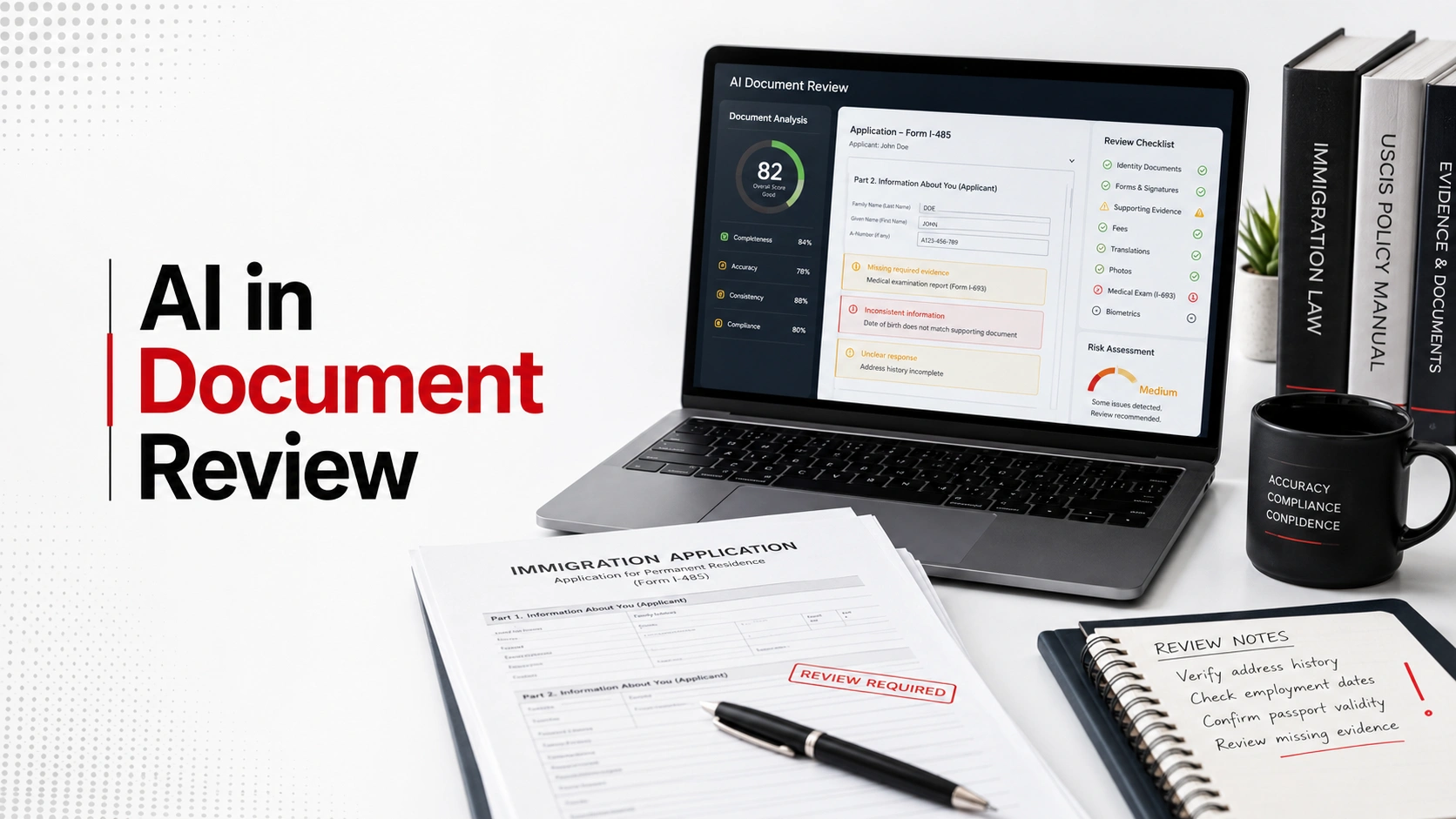
Artificial intelligence has changed the way people prepare documents. In only a short period of time, tools like ChatGPT have become part of everyday writing, research, planning, and business communication. Immigration applicants are also using these tools to prepare Statements of Purpose, visitor visa explanations, employment letters, support letters, spousal sponsorship narratives, reconsideration requests, and even responses to refusals. On the surface, this feels helpful because AI can write quickly, organize ideas, correct grammar, and make ordinary writing sound polished.
However, immigration is not ordinary writing.
A Canadian immigration application is a legal and evidentiary submission. Every sentence can matter. Every date can matter. Every document must align with the applicant’s history, the program requirements, and the officer’s concerns. A beautifully written letter can still be legally weak. A polished Statement of Purpose can still create refusal risk. A professional-looking employment letter can still be dangerous if it does not reflect the applicant’s actual work or the correct National Occupational Classification requirements.
This is where many applicants misunderstand the role of ChatGPT. AI can help with language, structure, and organization, but it does not automatically understand Canadian immigration law, current IRCC policy, program-specific evidentiary standards, officer reasoning, or the applicant’s complete immigration history. OpenAI itself advises users to approach ChatGPT critically and verify important information from reliable sources because ChatGPT can make mistakes, including fabricated references or overconfident answers to complex questions. (OpenAI Help Center)
That warning is especially important in immigration because mistakes are not harmless. A wrong explanation, missing disclosure, inaccurate job duty, or false statement can lead to refusal, credibility concerns, or even misrepresentation findings. IRCC warns that applicants are responsible for the information in their applications, even if a representative completes it for them, and that false information or fake documents can have serious consequences. (Canada)
In simple terms, AI can help prepare immigration documents, but it cannot replace immigration judgment.
The Biggest Problem: ChatGPT Writes Confidently Even When It Is Wrong
One of the most dangerous things about AI writing is confidence. ChatGPT can produce clear, polished, and convincing text even when the underlying information is wrong, incomplete, outdated, or not suitable for the case. This is not a small issue. In immigration, an answer that sounds confident can easily mislead applicants into believing they have a strong application when serious legal weaknesses remain.
For example, an applicant may ask ChatGPT to write a study permit Statement of Purpose. The tool may produce a well-structured letter explaining that Canada has world-class education, multicultural values, and career opportunities. The letter may sound impressive. However, it may fail to address the actual refusal risks, such as why the applicant is choosing a lower-level program after already completing a degree, why the program connects to future career plans, how financial evidence supports the application, and why the applicant is still a genuine temporary resident.
The problem is not grammar. The problem is legal relevance.
Immigration officers do not approve applications because writing sounds beautiful. They approve applications when evidence satisfies legal requirements. A polished but generic letter may actually weaken the file because it can sound artificial, vague, or disconnected from the applicant’s real circumstances.
AI Often Produces Generic Immigration Letters
One of the most common refusal risks created by ChatGPT is generic writing. AI tools are trained to produce language that sounds natural and complete, but they often rely on common patterns. This means many AI-generated immigration documents sound similar.
Study permit letters often say the applicant chose Canada because of high-quality education and global exposure. Visitor visa letters often say the applicant will return home because they respect Canadian laws. Work permit letters often say the applicant has relevant experience and will contribute to Canada’s economy. Spousal sponsorship letters often say the relationship is genuine, loving, and built on trust.
These statements are not necessarily wrong, but they are not enough.
Immigration officers review thousands of applications. Generic language becomes easy to recognize because it lacks the specific facts that make a case believable. Real immigration applications need real details. They need timelines, dates, decisions, family context, career logic, financial explanations, employment history, and documentary support.
A generic AI letter may sound professional, but it may not answer the officer’s real questions.
AI Can Create Wrong Job Duties and NOC Problems
One of the most serious risks involves employment letters and National Occupational Classification matching. Many applicants use ChatGPT to draft job duties for Express Entry, work permits, LMIA-based applications, PNP applications, or employer reference letters. This can be dangerous because AI may generate duties based on a job title rather than the applicant’s actual work.
Canadian immigration officers do not assess work experience based only on job titles. They review whether the applicant performed duties that substantially match the relevant NOC. If ChatGPT creates generic duties copied from online descriptions or duties that do not reflect the actual workplace, the application can face refusal.
This is especially risky for occupations where titles overlap across industries. An Administrative Assistant in a plumbing company may perform very different daily work from an Administrative Assistant in an accounting firm. A supervisor in a restaurant may have very different responsibilities from a supervisor in logistics. A manager title does not automatically prove managerial duties. Officers often look at business context, hierarchy, authority, decision-making, staff supervision, budget involvement, and actual responsibilities.
When AI writes duties without knowing the workplace, it may create a letter that sounds good but fails legally.
Worse, if the duties are exaggerated or inaccurate, the issue may move beyond refusal and into credibility or misrepresentation concerns.
AI Does Not Know the Applicant’s Full Immigration History
Immigration applications are rarely assessed in isolation. IRCC may compare current information with previous applications, prior refusals, travel history, employment disclosures, study history, family information, and immigration records. This is one of the reasons AI-generated documents can become risky.
ChatGPT can only work with the information provided to it. If an applicant does not mention previous refusals, past applications, old employment dates, prior immigration issues, family changes, or status history, the AI-generated document will not account for those facts. The result may be a letter that sounds complete but ignores important risks.
For example, a visitor visa applicant may ask AI to write a letter proving strong home-country ties. The letter may focus on employment, property, and family. But if the applicant previously applied for a study permit with different employment dates, or previously failed to disclose a refusal, the new letter may accidentally create inconsistencies.
This is where professional review matters. Immigration strategy is not only about writing one strong letter. It is about ensuring the entire record makes sense.
Have questions about your work permit options?
Book a ConsultationAI Can Accidentally Create Misrepresentation Risk
Misrepresentation is one of the most serious risks in Canadian immigration. IRCC warns that giving false or misleading information can lead to refusal and serious consequences, including a five-year ban from entering Canada in certain cases. (Canada)
Many applicants think misrepresentation only means fake documents or intentional fraud. That is not true. Misrepresentation can also arise from omissions, inaccurate answers, inconsistent information, or misleading statements that could affect an immigration decision.
AI can create this risk unintentionally. For example, it may write that an applicant has strong career opportunities in their home country without evidence. It may state that an applicant has managed employees when they did not. It may describe a relationship timeline inaccurately. It may create job duties that the applicant never performed. It may say funds are from salary savings when the funds actually came from a loan or family transfer.
The applicant may think these are just “nice words,” but immigration officers may treat them as factual claims.
Every factual statement in an immigration application should be true and supported. AI does not automatically know what is true. The applicant must verify everything before submission.
AI May Use Outdated Immigration Information
Immigration rules change frequently. Study permit requirements, work permit eligibility, proof of funds rules, PGWP policies, LMIA requirements, Express Entry categories, spousal open work permit eligibility, and provincial nomination criteria can change quickly. AI tools may not always have the latest information unless they are connected to current sources and the user verifies the output.
This is especially dangerous because AI may provide outdated but confident advice. An applicant may rely on old rules, old program criteria, or old document requirements and submit an application that no longer meets current standards.
In immigration, old information can become harmful information.
A strategy that worked in 2022 may fail in 2026. Applicants should always verify program requirements directly from official sources or through qualified professionals before relying on AI-generated immigration guidance.
AI Does Not Understand Officer Psychology
A strong immigration application does more than state facts. It anticipates how an officer may think. It identifies potential concerns and addresses them before they become refusal reasons.
AI often fails here because it may write what the applicant wants to say rather than what the officer needs to understand.
For example, an applicant may want a letter saying they love Canada, admire its education system, and plan to follow all rules. But the officer may need answers to very different questions. Why is the program logical? Why are the funds credible? Why does the applicant’s travel purpose make sense? Why will they leave Canada if required? Why does the job offer match their qualifications? Why is the relationship genuine despite limited time together?
Immigration writing is not marketing writing. It is officer-focused evidence writing.
ChatGPT can produce attractive language, but it may not identify the legal weakness unless guided by someone who understands immigration decision-making.
AI Can Make Refused Applications Worse
After a refusal, many applicants turn to ChatGPT and ask it to write a stronger reapplication letter. The tool may produce a respectful explanation disagreeing with the officer and asking for reconsideration. The problem is that many refusals cannot be fixed with disagreement.
If the officer refused because evidence was weak, the solution is stronger evidence. If the refusal involved employment concerns, the solution may be better work records. If the refusal involved finances, the solution may be clearer source of funds. If the refusal involved relationship genuineness, the solution may be stronger relationship evidence and explanation. If the refusal involved misrepresentation, the response may require legal analysis.
AI often writes explanations without reviewing the refusal letter, officer notes, previous application, forms, supporting documents, and immigration history. That can lead applicants to reapply with the same weaknesses.
IRCC has clearly warned in its public guidance that reapplying with the same information is unlikely to change a decision. This principle matters because AI-generated reapplication letters often improve wording but not evidence.
A stronger reapplication is not a better-looking version of the refused application.
It is a corrected application.
Need help preparing a strong application?
Get a Personalized AssessmentAI Can Overwrite the Applicant’s Real Voice
Immigration officers are not only reading documents for grammar. They are also assessing credibility. A personal statement should sound like the person whose life it describes. When AI rewrites everything into overly polished corporate language, the applicant’s real voice can disappear.
This is especially risky in relationship narratives, humanitarian applications, study plans, and explanation letters. Real lives are specific, imperfect, and human. AI often smooths everything into generic language. It removes the small details that make a story believable.
A spousal sponsorship relationship narrative should not sound like a brochure. A study permit SOP should not sound like a university advertisement. A visitor visa explanation should not sound like a legal template copied from the internet.
Human tone matters because credibility matters.
AI May Create Documents That Do Not Match the Evidence
Another major risk is mismatch between the written explanation and supporting documents. AI may write a strong story, but if the documents do not support that story, the application becomes weaker.
For example, an AI-generated financial explanation may say the applicant has stable savings, but bank statements may show sudden deposits. An AI-written employment explanation may say the applicant holds a senior position, but pay records and job letters may not support that level. An AI-written study plan may say the program will lead to career advancement, but the applicant’s background may show no logical connection.
Immigration applications fail when narratives and evidence do not match.
AI can create a convincing narrative, but it cannot automatically verify whether supporting documents prove that narrative.
AI Cannot Replace Professional Accountability
Canadian immigration law restricts who can provide paid immigration advice or representation. Applicants should be careful when relying on unlicensed agents, ghost consultants, or people who use AI to mass-produce immigration documents. IRCC emphasizes that applicants are responsible for all information in their application, even if a representative completes it for them. (Canada)
This is important because some applicants believe using AI reduces risk. In reality, it can increase risk if no qualified person reviews the final application.
AI does not carry professional liability. It does not owe applicants regulatory duties. It does not review original documents unless provided. It does not know the applicant’s complete immigration history. It does not appear before regulators if something goes wrong.
Professional judgment still matters.
Want to speak with a licensed RCIC?
Speak With an ExpertWhen ChatGPT Can Be Helpful
This does not mean ChatGPT is useless for immigration. Used carefully, AI can be helpful. It can help organize thoughts, improve grammar, simplify complex language, create first drafts, summarize documents, prepare question lists, and help applicants understand general concepts.
The key is understanding the difference between writing assistance and immigration advice.
AI can help improve presentation, but it should not decide strategy. It can help draft a paragraph, but it should not invent facts. It can help organize evidence, but it should not replace legal review. It can explain general ideas, but it should not be treated as the final authority on eligibility or refusal strategy.
Used responsibly, AI can support better preparation.
Used blindly, it can create refusal risk.
What Applicants Should Do Before Using AI for Immigration Documents
Applicants who use ChatGPT for immigration writing should follow a simple principle: never submit AI-generated content without human review, factual verification, and evidence matching.
Every factual statement should be checked. Every date should match forms and documents. Every job duty should reflect actual work. Every refusal should be disclosed. Every financial explanation should match bank records. Every study plan should connect logically with education and career history. Every relationship detail should be accurate.
Applicants should also avoid asking AI to “make it stronger” if that means exaggerating facts. Strong does not mean dramatic. Strong means accurate, specific, supported, and legally relevant.
The safest immigration documents are not the most polished documents.
They are the most credible documents.
Final Thoughts
ChatGPT has changed how people write, but immigration applications cannot be treated like ordinary writing projects. The hidden risk of using AI is that it can make weak applications look professionally written without fixing the actual legal and evidentiary weaknesses.
Many refusals today are not caused by poor grammar. They are caused by weak logic, missing evidence, inconsistent history, unclear purpose, inaccurate job duties, unsupported claims, and credibility concerns.
AI can help with language, but it cannot replace truth, evidence, legal strategy, or professional judgment.
In Canadian immigration, the question is not whether a letter sounds good.
The question is whether the application proves what the law requires.
How Can X Global Can Help
At Can X Global, we understand the role AI can play in modern immigration preparation, but we also understand its limits. Our team reviews applications through legal, factual, and strategic lenses. We assess immigration history, prior refusals, document consistency, employment evidence, financial records, study plans, relationship narratives, and credibility risks before submission.
We do not believe immigration applications should be mass-produced by templates or blindly generated by AI.
AI can assist the process.
But immigration strategy still requires human judgment.
Because in Canadian immigration, one wrong sentence can sometimes change the entire outcome.
Want your application reviewed by a licensed RCIC?
Book a ConsultationRelated Articles
- How Artificial Intelligence Is Quietly Changing Canadian Immigration Decisions in 2026
- Does IRCC Use AI to Refuse Applications? Inside Chinook, Automation, and Modern Immigration Processing
- AI vs Human Officers: Who Really Decides Your Canadian Immigration Application?
- Can AI Detect Immigration Fraud Better Than Humans? The Future of Immigration Screening
Get Expert Immigration Advice
10+ years helping clients achieve Canadian permanent residency.
Book a ConsultationTrusted by Clients from 30+ Countries
We provide trusted and effective Immigration solutions, assisting clients from around the world in successfully starting their new life in Canada.